Written by Ari Mayzick · Go Travel Box
Published November 11, 2026 · Updated November 11, 2026
Utah’s five national parks look close together on a map. On the road, each feels different. Zion has tall canyon walls and a river running through the valley. Bryce Canyon opens into a bowl of orange hoodoos. Capitol Reef mixes cliffs, orchards, and a quieter pace. Around Moab, Arches and Canyonlands offer two very different ways to experience the desert.
This Utah Mighty Five road trip guide brings them together in a nine-day route from Las Vegas to Salt Lake City. It includes real photos, overnight bases, route maps, a sample budget, and easier alternatives to demanding hikes. The aim is to enjoy the parks with time to look around, eat lunch, and change plans when conditions require it.
First Utah National Parks Trip? Start Here
Allow nine days for a varied first visit, use three main park bases plus a Bryce overnight, and book your vehicle and accommodation together. This route is one way. A cheap flight into one airport can lose its advantage when the car’s return fee is added.
The five parks are Zion, Bryce Canyon, Capitol Reef, Arches, and Canyonlands. They have separate entrances, facilities, and rules. An entrance pass is not a reservation for a campsite, a permit for Angels Landing, or a guarantee that a parking lot will have space.
Choose one main outing each day. A viewpoint visit is a real park experience, and a shorter walk can leave room for the details you would miss while rushing to the next trailhead.
Utah’s Mighty Five at a Glance
| Planning question | Practical starting point |
|---|---|
| Main route | Las Vegas → Zion → Bryce Canyon → Capitol Reef → Moab → Salt Lake City |
| Suggested length | Nine days and eight nights; add time for long hikes or a slower pace |
| Main overnight bases | Springdale, Bryce Canyon City or nearby, Torrey, and Moab |
| Suggested seasons | Compare spring and fall; elevation, heat, storms, and snow still matter |
| Transport | A suitable rental car; ordinary paved-road plans do not require an off-road vehicle |
| Sample total for two | $4,400 for nine days, including a contingency; assumptions below |
| Book first | Flights, one-way car, refundable rooms, and any genuinely necessary permits |
| Key access detail | Zion shuttles, park fees, hike permits, and changing road conditions are separate checks |
Important park rules and fee information were checked November 10, 2026. Recheck the National Park Service information for your travel year, especially if planning a 2027 trip or later.
Table of Contents
- First Utah National Parks Trip? Start Here
- Utah's Mighty Five at a Glance
- How to Plan Your Utah Mighty Five Road Trip
- Best Time to Visit Utah's National Parks
- How Much Does a Utah Mighty Five Road Trip Cost?
- Park Entrance Fees, Passes, Reservations, and Permits
- Where to Stay Along the Route
- Getting There and Choosing a Car
- Best Places to Visit in Utah's Mighty Five
- A Nine-Day Utah Mighty Five Road Trip Itinerary
- Seven-Day, Ten-Day, and Slower-Paced Alternatives
- Itinerary Maps and Route Planning
- What and Where to Eat Along the Route
- Free and Budget-Friendly Things to Do
- Experiences for Different Travelers
- Best Photography Stops and Photo Etiquette
- Essential Things to Know Before You Go
- What to Pack for Utah's Mighty Five
- Important Contacts and Official Resources
- Common Mistakes on a Utah Mighty Five Road Trip
- Frequently Asked Questions About Utah's Mighty Five
- Your Final Utah Road Trip Checklist
- Reader Questions and Travel Experiences
- Explore More Go Travel Box Guides
- Leave a Reply
How to Plan Your Utah Mighty Five Road Trip
How Many Days Do You Need?
Nine days gives you two nights near Zion, one near Bryce, two near Capitol Reef, and three in Moab. It still involves several travel days. Ten to twelve days is more comfortable if you want substantial hikes, an additional Canyonlands district, or a night in Salt Lake City before flying home.
With seven days, reduce the number of outings and accept that some park visits will be short. With five days, choose either Zion and Bryce or Moab and nearby parks. Trying to fit all five into a short break can turn the holiday into a series of long transfers.
A Step-by-Step Booking Checklist
- Choose a season and decide how much walking your group wants.
- Price Las Vegas arrival and Salt Lake City departure alongside the full car quote.
- Hold accommodation in the four overnight areas before buying nonrefundable extras.
- Check the rules for any specific hike, campsite, or guided activity you want.
- Compare park entrance payments with a pass you are eligible to buy.
- Save offline maps and check road, trail, weather, and shuttle information again before each park visit.
Reserve the fixed pieces first. Leave meal choices, extra viewpoints, and many shorter walks flexible. Weather and tired legs are good reasons to change a day’s plan.
Best Time to Visit Utah’s National Parks
There is no single season that gives every park the same conditions. Bryce’s higher elevation can feel like winter while a lower desert location feels warm. Spring and fall are useful starting points, but neither removes the need to check forecasts.
| Season | Advantages | What needs extra thought |
|---|---|---|
| Spring | Comfortable conditions on many lower-elevation days | Snow or ice at higher elevations, wind, and variable river conditions |
| Summer | Longer daylight and many seasonal services | Serious heat, crowded facilities, thunderstorms, and flash-flood risk |
| Fall | Appealing temperatures on many days and a broad choice of activities | Busy popular periods, shorter daylight, and early mountain snow |
| Winter | A quieter visit in some places and striking snowy scenery | Ice, cold, road restrictions, reduced services, and less daylight |
Avoid making a strenuous low-desert hike the centerpiece of a hot summer day. Start with conditions rather than a photograph you want to recreate. A shady hotel break does not make an unsafe trail safe earlier or later in the day.
Compare room prices around weekends, school breaks, and public holidays. A lower rate is useful only if the season suits your planned activities. Book dinner and fuel stops with seasonal opening hours in mind.
How Much Does a Utah Mighty Five Road Trip Cost?
The following is an illustrative budget for two adults sharing a room and car for nine days and eight nights. These are planning allowances, not current hotel or rental quotations. The example assumes eligibility for the $80 U.S.-resident annual America the Beautiful pass and ordinary paved-road touring.
| Item | Assumption | Total for two |
|---|---|---|
| Accommodation | Eight nights averaging $190, including estimated room taxes | $1,520 |
| Food | $50 per person per day, with dining taxes and tips within the allowance | $900 |
| Rental car | Nine days averaging $80, including estimated taxes and chosen protection | $720 |
| Fuel | Route and local outings allowance | $240 |
| Parking and local costs | Allowance beyond included park entry | $80 |
| National park pass | Eligible U.S.-resident annual pass | $80 |
| Selected activities | Modest paid-activity allowance | $160 |
| One-way car return | Illustrative drop-off allowance; actual quotes vary | $300 |
| Subtotal | Before contingency | $4,000 |
| Contingency | Ten percent | $400 |
| Planning total | Nine days for two adults | $4,400 |
This excludes flights, extra nights, shopping, major guided adventures, and equipment or permit costs beyond the stated activity allowance. A different pass price, premium room, or car return fee changes the total. Check whether a car quote already includes a one-way charge before adding it again.
Budget travelers can compare simpler rooms and groceries. Midrange travelers often spend more for convenient park bases. Luxury stays and private tours need a separate budget rather than a small adjustment to this example.
Park Entrance Fees, Passes, Reservations, and Permits
These terms are easy to mix up. An entrance payment gets you through the fee requirement. A reservation holds a specific service or space. A permit allows an activity with its own rules. None automatically substitutes for the others.
| Park | Standard private-vehicle entrance fee checked November 10, 2026 | Separate planning issue |
|---|---|---|
| Zion | $35 | Shuttle operations, specific hike permits, and large-vehicle restrictions |
| Bryce Canyon | $35 | High-elevation weather and any booked accommodation or camping |
| Capitol Reef | $20 | Which roads and areas are open, and separate activities or camping |
| Arches | $30 | Parking capacity, camping, and Fiery Furnace access rules |
| Canyonlands | $30 | Choosing a district and any backcountry permit requirements |
The five standard vehicle fees add up to $150. Fee categories and valid periods matter, so check the actual terms for your vehicle and party rather than treating this table as a ticket.
For 2026, the annual America the Beautiful pass is $80 for eligible U.S. residents and $250 for nonresidents. Separate $100 nonresident entrance charges apply to visitors aged 16 and older at certain parks, including Zion and Bryce Canyon, unless covered by a qualifying pass or other applicable exemption. These additional charges do not apply to all five Utah parks. Review the current coverage rules for your party before choosing how to pay.
Arches does not require a general timed-entry reservation in 2026. Capacity restrictions can still cause delays, and camping or Fiery Furnace access has separate arrangements. Do not assume the same general entry rule will apply in a later year.
Where to Stay Along the Route
| Overnight area | Nights in this plan | Why use it | What to check |
|---|---|---|---|
| Springdale | Two | Convenient base for Zion Canyon | Parking, town shuttle access, room taxes, and cancellation terms |
| Bryce Canyon City or nearby | One | Useful for an early park visit | Exact distance, seasonal services, and heating |
| Torrey | Two | A practical base for Capitol Reef | Dinner hours, grocery options, and room location |
| Moab | Three | A base for Arches and Canyonlands’ Island in the Sky | Traffic, parking, laundry, and the actual drive to each park |
Families may value a kitchen, laundry, and separate sleeping space more than a decorative lobby. Couples may prefer a quiet room and an easy evening walk to dinner. Budget travelers should compare the full cost of a more distant room, including extra fuel and time.
Ask about steps, lifts, bathroom layout, and accessible parking if those details affect your stay. A general accessibility label does not answer every practical question. Vacation rentals may add cleaning fees and have minimum stays that do not suit a one-night stop.
Getting There and Choosing a Car
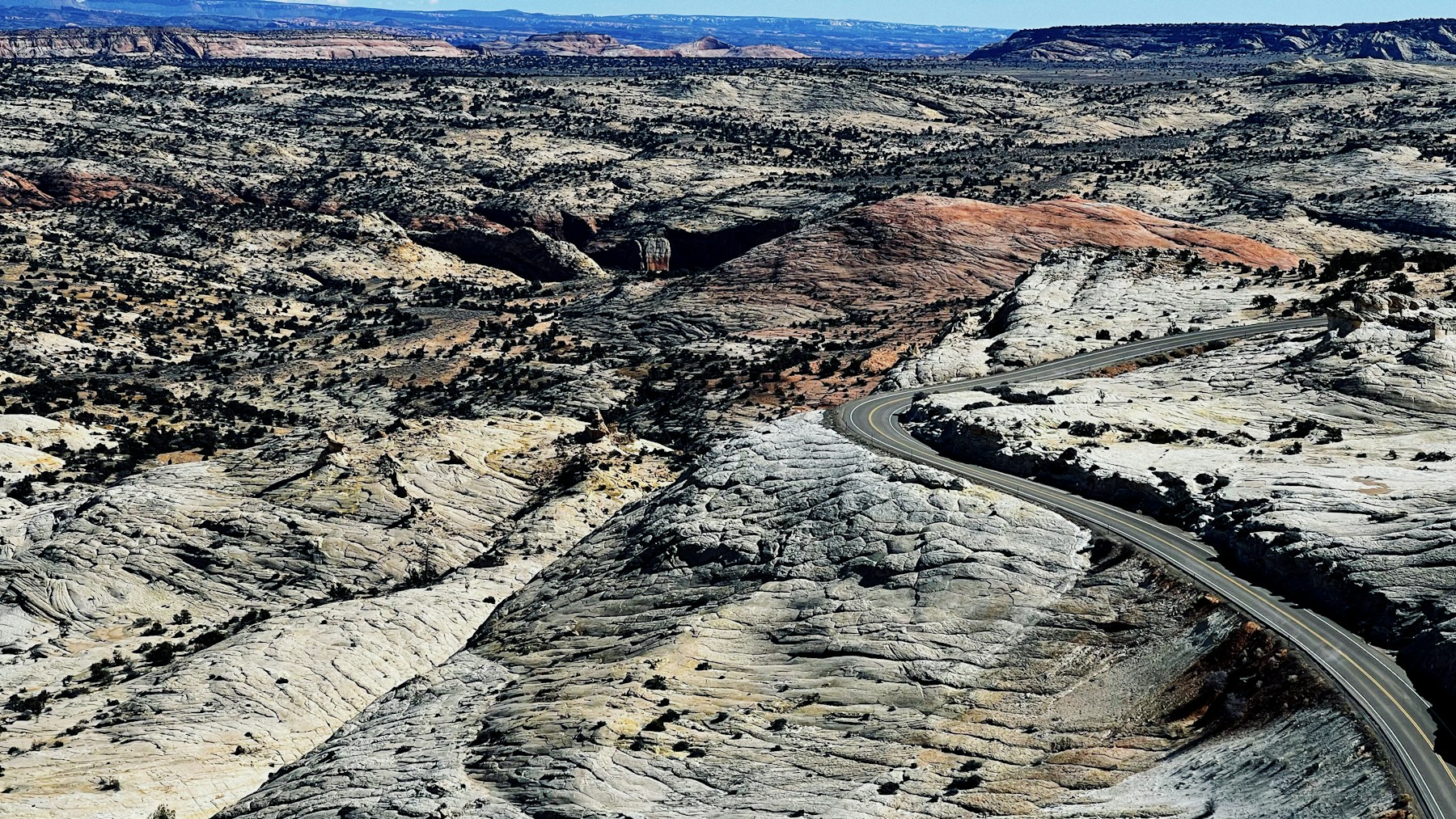
Las Vegas to Zion and Moab to Salt Lake City
Las Vegas is a useful starting airport for the southwestern end. Allow roughly three to four hours of ordinary driving to the Springdale area, then add airport collection, meals, traffic, and stops. Nevada and Utah can have different local clock times, so check the date-specific time change before booking an activity.
At the other end, allow roughly four to five hours of ordinary driving from Moab to Salt Lake City, before delays and breaks. A final-day flight needs a generous buffer for rental return and airport procedures. An extra Salt Lake City night is often a better choice for an early departure.
Rental Cars, Campervans, and Accessible Travel
Choose luggage space, seat comfort, and a vehicle you can park confidently. An SUV badge does not grant permission to drive a rental on rough or unpaved roads. Check the contract and use paved routes unless both the road and your vehicle agreement suit another plan.
Zion introduced new size and weight limits on the Zion–Mount Carmel Highway corridor between Canyon Junction and the East Entrance on June 7, 2026. These affect larger vehicles across that road section, rather than simply requiring an old-style tunnel payment. Measure a camper or vehicle combination and check the current rules before booking it.
Accessible vehicles and suitable rooms can be limited. Arrange those first, then choose park facilities and viewpoints around verified access details. Park shuttle accessibility does not establish that every trail is suitable.
Best Places to Visit in Utah’s Mighty Five
1. Zion National Park
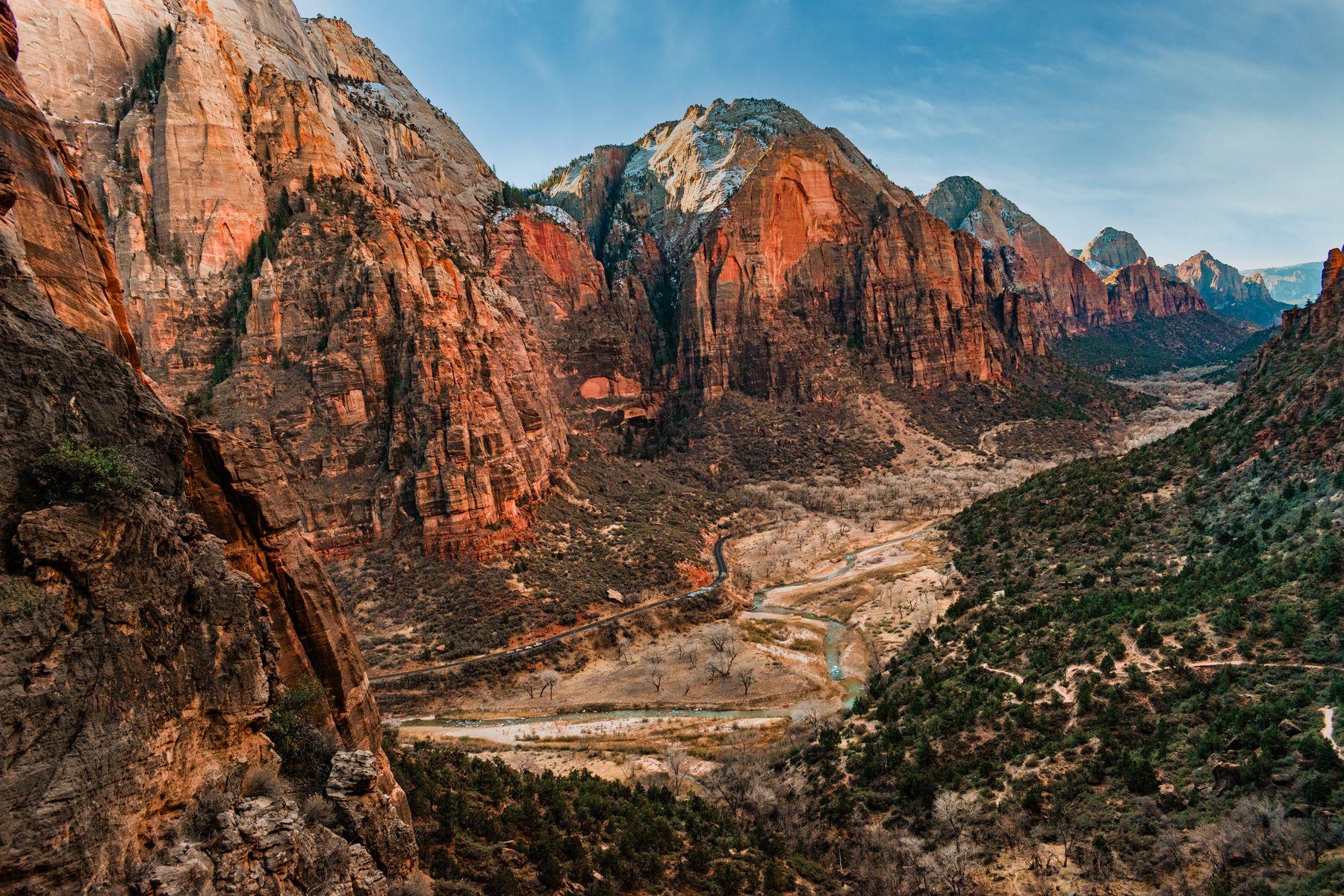
Zion is a good place to slow down. Looking up from the canyon floor gives a different sense of scale from looking at a panorama on a screen. A shuttle ride, suitable riverside outing, and time at a viewpoint can make a satisfying first day without a demanding summit hike.
| Detail | First-visit advice |
|---|---|
| Best for | Canyon scenery, suitable walks, and a two-night introduction to the parks |
| Location and map | Zion National Park map |
| Time needed | One full day plus arrival time; more for ambitious hikes |
| Entry and booking | Standard vehicle fee above; individual activities can need separate permits |
| Getting around | Zion Canyon Scenic Drive uses park shuttles during shuttle operation; private cars are restricted then |
| Accessibility | Check the specific shuttle stop, facility, and trail information with the park |
| Practical tip | Separate a relaxed canyon visit from any demanding hike you hope to attempt |
The park shuttle is free, and general park entry and shuttle riding do not require a reservation under the rules checked. Angels Landing requires its own permit. The Narrows needs careful attention to river conditions, closures, weather, and flash-flood risk. Neither hike should be treated as an automatic activity for every visitor.
2. Bryce Canyon National Park
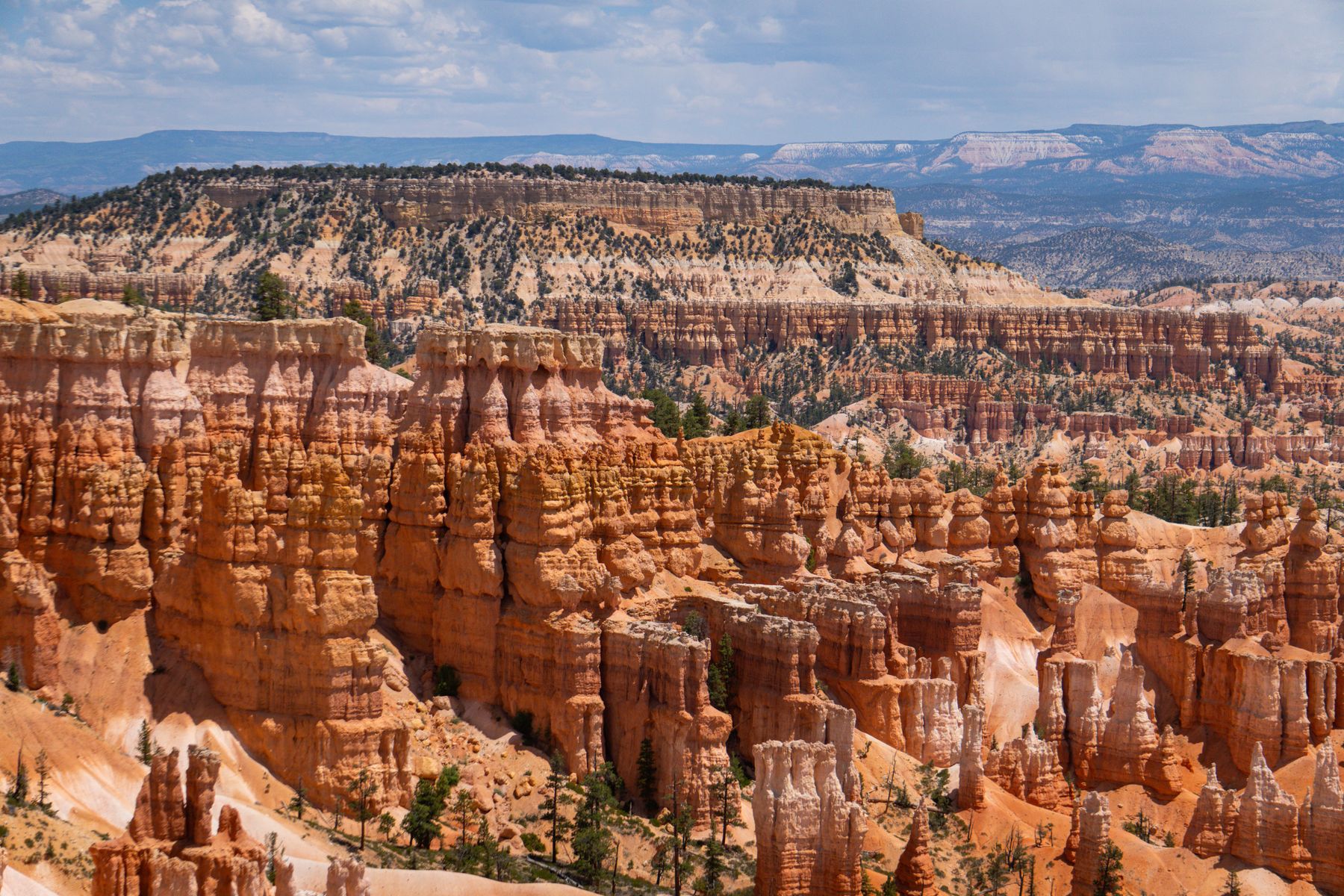
Bryce’s hoodoos are easiest to appreciate when you leave time to watch changing light. Start with an open, suitable viewpoint, then decide whether a trail below the rim fits the conditions and your group. The climb back up can feel more demanding than the walk down suggests.
| Detail | First-visit advice |
|---|---|
| Best for | Hoodoo views, photography, and a contrasting high-elevation landscape |
| Location and map | Bryce Canyon National Park map |
| Time needed | A substantial half day to a full day; overnight nearby for flexibility |
| Entry and booking | Standard vehicle fee above; camping and lodging are separate |
| Getting there | Use current road information and allow time for the Zion-to-Bryce transfer |
| Accessibility | Compare current viewpoint access and facility information before choosing stops |
| Practical tip | Bring warm layers even when the previous park felt warm |
Snow and ice can change a short outing. Keep away from unprotected edges and use only open trails. A sunrise plan also needs a realistic bedtime after the previous day’s travel.
3. Capitol Reef National Park
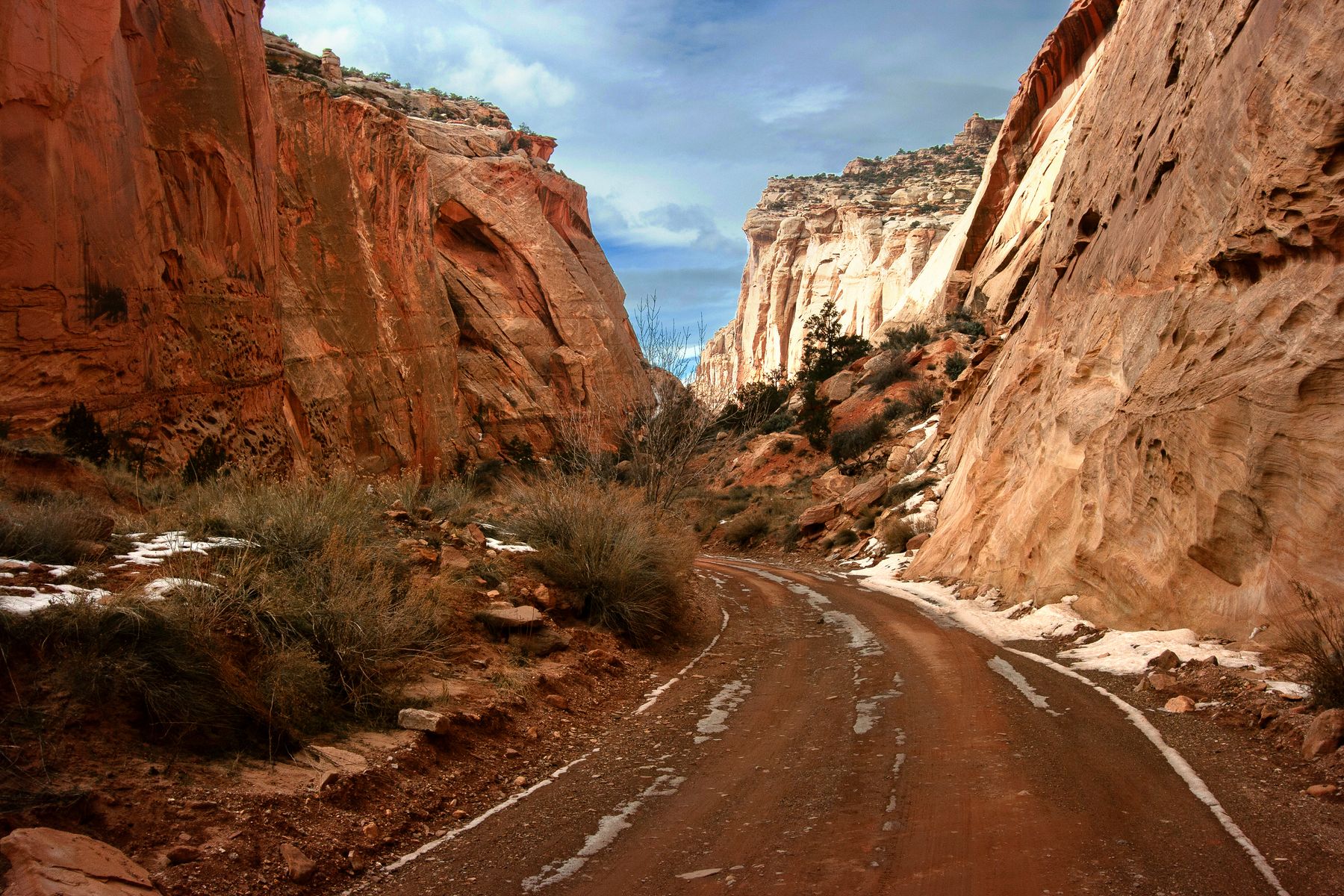
Capitol Reef rewards an unhurried visit. Around Fruita, cliffs rise behind a landscape with a human history as well as a geological one. Take time for the visitor center, an open scenic road, and a walk that suits the day’s weather.
| Detail | First-visit advice |
|---|---|
| Best for | Cliffs, scenic touring, history, and a quieter two-night base |
| Location and map | Capitol Reef National Park map |
| Time needed | One full day plus the journey through the region |
| Entry and booking | Standard vehicle fee above; check the current fee area and activity rules |
| Getting there | Torrey is a practical base; Scenic Byway 12 is an appealing approach when conditions suit |
| Accessibility | Ask about current facilities and the surface of any proposed route |
| Practical tip | Do not assume an orchard, food outlet, or side road is available year-round |
The Scenic Drive rehabilitation was completed in 2025, but that does not promise every road will be open on your travel day. Flooding, weather, and local work can affect access. Remote backcountry roads need a different plan from this paved-road itinerary.
4. Arches National Park
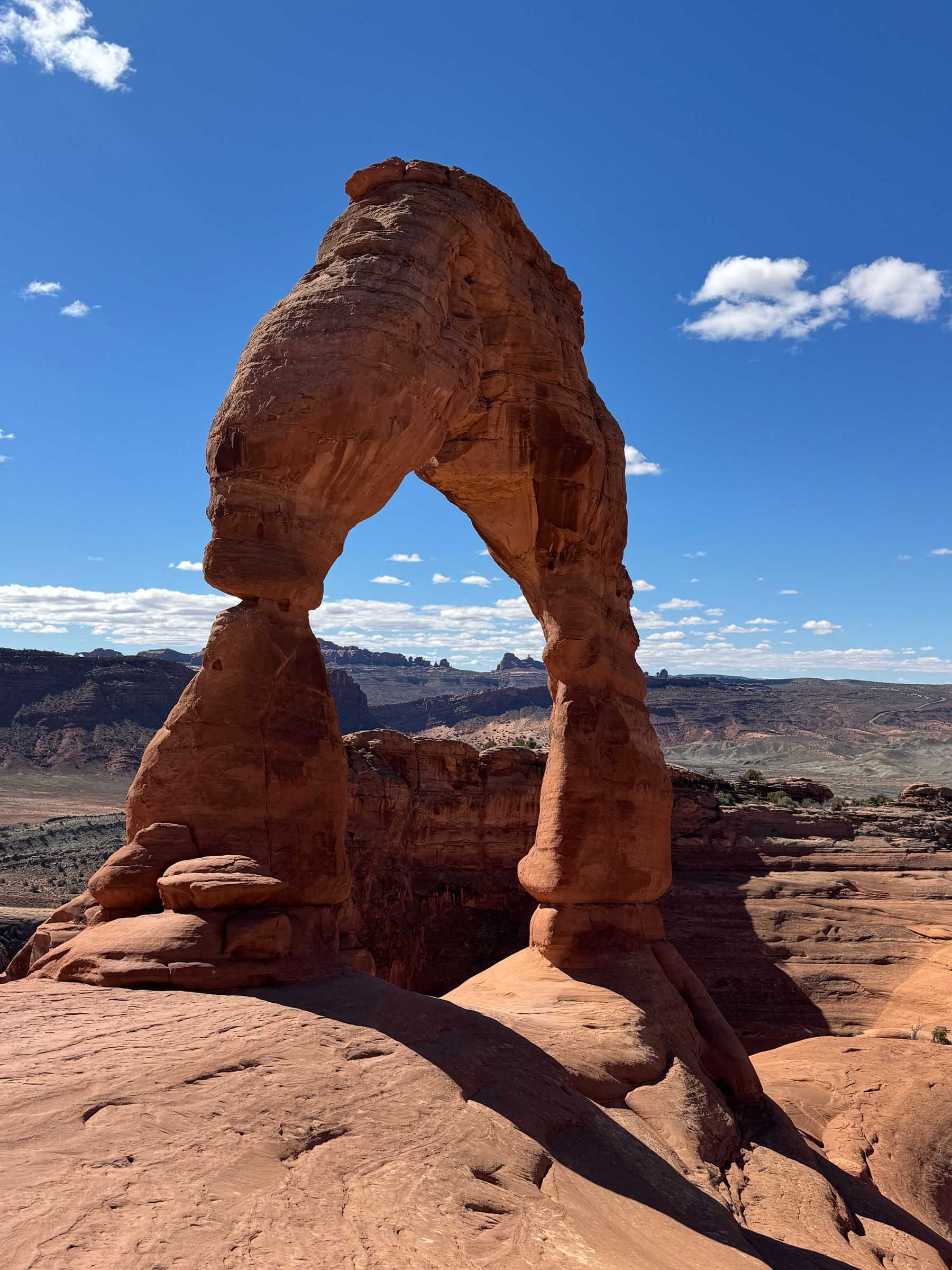
Arches is more than a stop for one famous photograph. The shapes, open space, and changing colors can fill a whole day. Choose a small number of stops and allow time for parking and walking between them.
| Detail | First-visit advice |
|---|---|
| Best for | Sandstone formations, varied viewpoints, and carefully chosen walks |
| Location and map | Arches National Park map |
| Time needed | One full day for a useful first visit |
| Entry and booking | No general timed-entry reservation in 2026; recheck later-year rules |
| Getting there | Drive from Moab and allow for possible entrance or parking delays |
| Accessibility | Distinguish a roadside viewpoint from the trail to the formation itself |
| Practical tip | A Delicate Arch viewpoint and the main Delicate Arch hike are different outings |
Match the route to your fitness and the forecast. Exposed rock, heat, and limited shade can make an apparently short distance demanding. Carry your own water and never climb on arches.
5. Canyonlands National Park: Island in the Sky
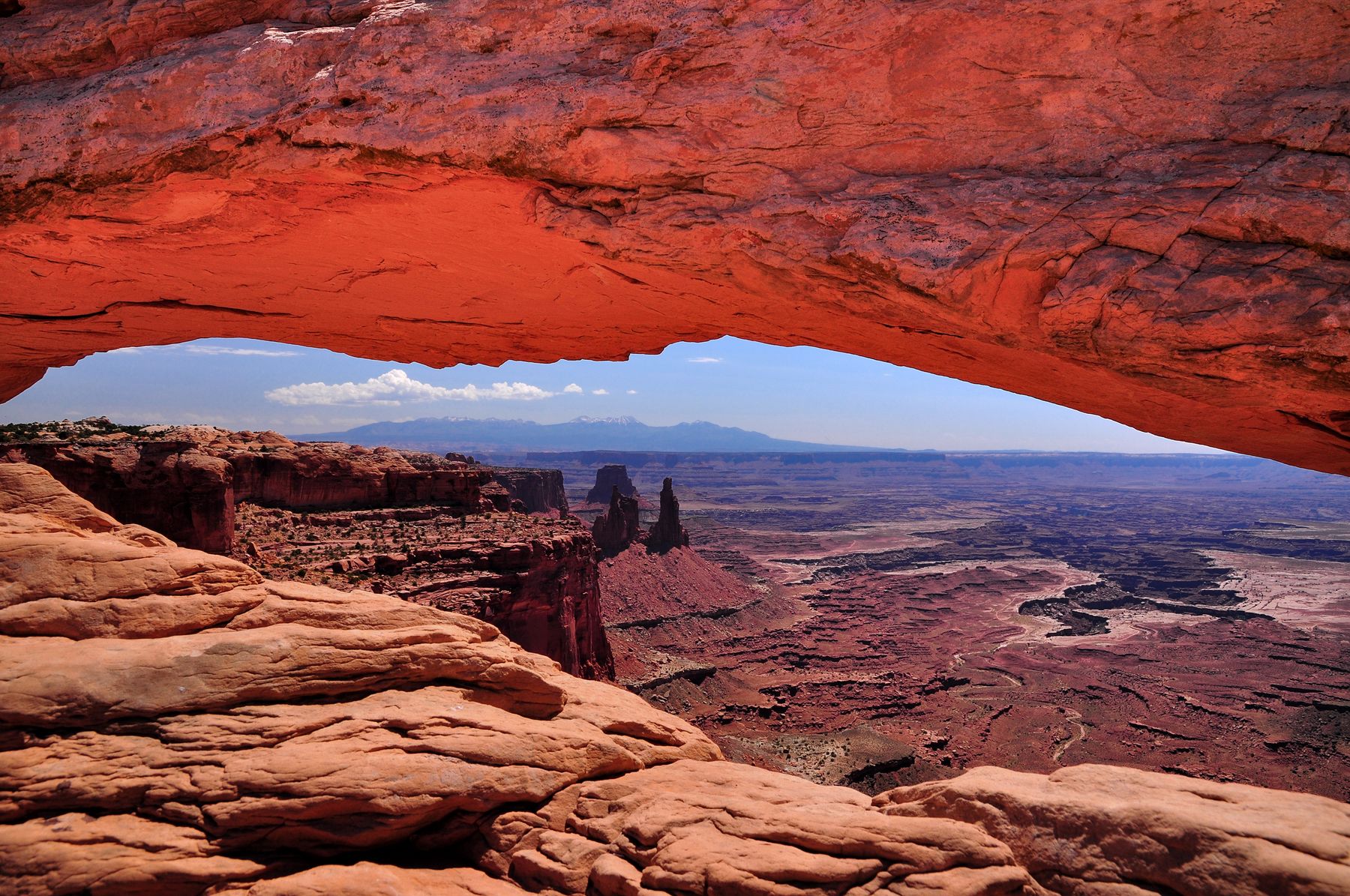
For this itinerary, choose Island in the Sky. The broad canyon views offer a different experience from Arches, even though both are visited from Moab. Mesa Arch is a popular stop, but a day built around suitable overlooks can be just as rewarding.
| Detail | First-visit advice |
|---|---|
| Best for | Canyon panoramas, viewpoints, and a day with selected short outings |
| Location and map | Island in the Sky visitor center map |
| Time needed | A full day from Moab with the return journey included |
| Entry and booking | Standard vehicle fee above; backcountry travel can need separate permits |
| Getting there | Drive to the correct district; the districts are not joined by a quick park road |
| Accessibility | Check individual overlooks, parking areas, restrooms, and paths |
| Practical tip | Skip a crowded sunrise stop if legal parking is full; choose another suitable viewpoint |
The Needles is a separate outing. Trying to add it casually after an Island in the Sky day creates much more driving than a glance at the park name suggests. Stay well back from cliff edges and keep children close.
A Nine-Day Utah Mighty Five Road Trip Itinerary
This plan counts the Las Vegas arrival day and the Salt Lake City departure day. Arrival flight times can require an extra night. Driving allowances below are broad guides for normal paved routes, before sightseeing, weather delays, and meaningful meal stops.
| Day | Route and main plan | Overnight | Driving allowance |
|---|---|---|---|
| 1 | Collect the car in Las Vegas and travel to Springdale; keep the evening simple | Springdale | About 3–4 hours, plus airport and stops |
| 2 | Zion Canyon, a suitable walk, and time for the shuttle | Springdale | Local travel and shuttle time |
| 3 | Transfer to Bryce; choose open viewpoints rather than a rushed long hike | Bryce area | About 2–3 hours, depending on route and access |
| 4 | An optional short Bryce visit, then Scenic Byway 12 toward Torrey | Torrey | About 3–4 hours of driving, plus scenic stops |
| 5 | Capitol Reef at a comfortable pace | Torrey | Local park travel |
| 6 | Travel to Moab; groceries, laundry, and a relaxed evening | Moab | About 3–4 hours, depending on route |
| 7 | Arches with selected formations and walks | Moab | Local driving, entrance queues, and parking |
| 8 | Canyonlands’ Island in the Sky and return to Moab | Moab | Around 1.5–2+ hours return to the district, plus park touring |
| 9 | Travel to Salt Lake City with a generous departure buffer | Trip ends | About 4–5 hours, plus stops and airport procedures |
Avoid making day six another major hiking day simply because its transfer looks shorter. This is a useful point to restock, wash clothes, and catch up on rest. That pause helps the final two park days feel like a holiday.
Seven-Day, Ten-Day, and Slower-Paced Alternatives
If You Have Seven Days
Reduce to one night near Zion, one near Bryce, one in Torrey, and three in Moab, with the seventh day for departure. That version gives Zion much less time and puts more pressure on the arrival day. Choose it only with suitable flights and modest walking plans. A better short-trip choice for many visitors is to focus on two or three parks.
If You Have Ten Days or More
Add a Salt Lake City night before departure, an extra Zion day, or another Moab day. Choose according to your interests rather than automatically adding another long drive. A separate Needles visit needs its own route and time allowance.
If You Need a Las Vegas Round Trip
The return from Moab makes a substantial additional travel day. Rebuild the itinerary with an extra overnight and realistic flight timing. Do not replace the Salt Lake City finish with a tight same-day drive to a Las Vegas departure.
Itinerary Maps and Route Planning
Save the route in sections rather than relying on one long phone itinerary. Maps may choose a faster road that misses a scenic section, or suggest a road unsuitable for your vehicle. The current closure information and signs take priority.
- Las Vegas to Springdale driving route
- Springdale to Bryce Canyon route
- Bryce to Torrey via Escalante and Boulder
- Torrey to Moab route
- Moab to Salt Lake City route
Download the relevant map areas before leaving reliable Wi-Fi. Carry a charging cable and keep enough fuel for changes of plan. A scenic road is not an invitation to stop outside a legal pullout.
What and Where to Eat Along the Route
Use Springdale, the Bryce area, Torrey, and Moab to organize meals and supplies. Restaurant availability varies, particularly outside busy seasons. Check opening hours before assuming a late arrival will still leave plenty of dinner choices.
A simple breakfast, packed lunch, and relaxed dinner work well for many park days. Bring a cooler if suitable for your vehicle and accommodation. Protect food from heat and follow park storage rules rather than leaving scraps for wildlife.
Vegetarian, vegan, halal, and allergy-sensitive travelers should check menus and preparation arrangements in advance. A dietary label does not establish that cross-contact is prevented. Carry an appropriate backup meal and explain any serious allergy clearly.
Plan for U.S. sales taxes and customary dining tips within your food allowance. Refill drinking water at confirmed safe facilities. Do not rely on a stream or a last-minute store stop for the day’s supply.
Free and Budget-Friendly Things to Do
The national park entrance requirement still applies to activities inside a fee area. Once entry is covered, many viewpoints, visitor-center exhibits, and suitable walks do not need an additional tour ticket.
Spend a low-cost day with breakfast at your accommodation, a packed lunch, two or three park stops, and a simple dinner. Avoid buying an activity simply to fill a gap between hikes. Quiet time watching the changing light can be the best part of the day.
Compare a pass against the rules for your party rather than its headline price alone. Share a vehicle where practical, carry groceries, and choose fewer overnight changes. Never use a closed road, unauthorized campsite, or roadside parking restriction as a money-saving shortcut.
Experiences for Different Travelers
| Traveler | A useful approach |
|---|---|
| Families | One main outing, regular snack and restroom stops, and time away from the car |
| Couples | A quieter evening, a chosen viewpoint, and fewer rushed hotel changes |
| Solo travelers | A shared itinerary with someone trusted, conservative route choices, and reliable supplies |
| Groups | Agree on walking ability, start times, and a clear meeting point before separating |
| Travelers with access needs | Verify each facility, path surface, shuttle arrangement, and hotel detail |
| Visitors who prefer less walking | Choose suitable overlooks and visitor centers, allowing time to rest |
Avoid choosing an activity around the strongest walker alone. A shorter shared outing followed by optional separate plans can work better for everyone.
Best Photography Stops and Photo Etiquette
Bryce’s hoodoos, Zion’s canyon walls, Capitol Reef’s cliffs, the formations in Arches, and Canyonlands’ overlooks all offer possibilities. Light and weather can matter more than arriving at a famous spot at an exact minute.
Use legal parking, stay on permitted surfaces, and keep clear of road traffic and fragile ground. Do not walk on biological soil crust to improve a camera angle. Give wildlife space and leave rock art and historic features untouched.
Busy sunrise locations need patience. Do not block a path with a tripod or step toward an exposed edge to avoid other people in the frame. Check the current rules before using a drone; park restrictions are separate from general aviation rules.
Essential Things to Know Before You Go
Heat, Storms, and Trail Conditions
Carry adequate water, sun protection, food, and suitable layers. Desert storms can create dangerous conditions beyond where rain is falling. Slot canyons, river hikes, exposed rock, and unpaved roads need specific condition checks, not just a city weather forecast.
Keep a less demanding alternative for each day. Ask a ranger about current conditions and be willing to turn around. A permit allows an activity under its rules; it does not certify that today’s conditions suit your group.
Payments, Documents, and Mobile Service
Carry the documents needed for your rental and park pass. International visitors should check U.S. entry requirements and their driving-document requirements through the relevant official services before travel. Prices are in U.S. dollars, and payment arrangements vary by facility.
Mobile coverage can be unreliable. Save room addresses, route sections, booking references, and emergency information offline. A phone battery and a good signal should not be the only parts of your navigation plan.
What to Pack for Utah’s Mighty Five
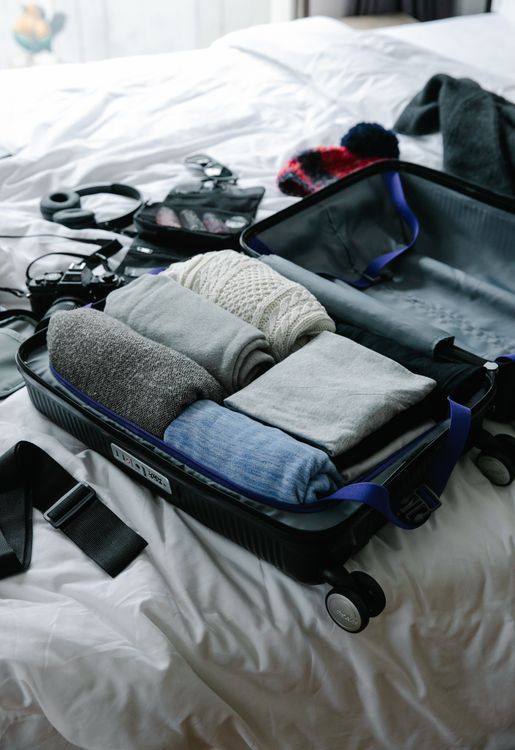
- Refillable water containers with sufficient capacity for the day’s conditions.
- Comfortable footwear with suitable grip, plus layers for wind, cold, and elevation changes.
- Sun protection, food, a cooler where practical, and a small first-aid kit.
- Offline maps, a charging cable, a power bank, and saved accommodation details.
- Passes, identification, rental documents, and any specific permits.
- Children’s supplies, necessary medicines, and equipment for personal access needs.
Specialist hikes may require different clothing, equipment, and skills. A general road trip packing list is not a complete preparation plan for a river hike, exposed climb, or remote backcountry route.
Important Contacts and Official Resources
For an emergency in the United States, call 911 when you can connect. Tell the operator the park, road or trail, nearest identifiable location, and the nature of the problem. Save location information before leaving the vehicle.
Use the National Park Service’s current pages and visitor centers for each park’s alerts, fees, permits, and access information. Check Utah road conditions through UDOT and Nevada road conditions through the appropriate state service before transfers. Airport and rental support details should come from your own booking documents.
Save your accommodation numbers and insurer’s assistance details offline. The visitor center is useful for local planning, but emergency assistance should not depend on finding a visitor center open.
Common Mistakes on a Utah Mighty Five Road Trip
- Treating five parks as five quick photo stops instead of allowing time inside them.
- Assuming all entrance fees, permits, shuttles, and reservations are the same thing.
- Using summer city temperatures to judge conditions on an exposed desert hike.
- Booking a large camper before checking Zion’s current road restrictions.
- Entering the wrong Canyonlands district in a navigation app.
- Forgetting the one-way car cost or the extra return day for a Las Vegas loop.
- Driving an unapproved rental onto a rough road because it appears on a phone map.
Frequently Asked Questions About Utah’s Mighty Five
Can You Visit All Five Parks in Nine Days?
Yes, with a route like this and selected activities. It is an introduction, not time to do every famous hike. Arrival and departure times can require extra nights.
Which Park Should First-Time Visitors Skip if Time Is Short?
Choose by geography and interests rather than treating one park as unimportant. A short trip works better around Zion and Bryce or around Moab than with a rushed drive across the whole state.
Do You Need a Rental Car?
A car is the practical choice for this independent itinerary. Zion’s local shuttle does not connect all five parks. A guided multi-day tour is another option if its pace, stops, and access arrangements suit you.
Is the Annual National Park Pass Worth It?
Compare your party’s eligibility, pass coverage, and the current entrance rules. The standard vehicle fees for these five parks total $150, but resident and nonresident pass prices and additional charges change the calculation.
What Can You Do in Bad Weather?
Choose open visitor-center exhibits, suitable town activities, or a rest period. Do not replace a closed trail with an unfamiliar remote route. Severe weather may mean canceling an outing completely.
Is This Route Suitable for Families?
It can be, with shorter outings, suitable seats, regular breaks, and realistic expectations. Nine travel days still involve a lot of driving. Build the plan around the youngest or least comfortable traveler.
Your Final Utah Road Trip Checklist
- Confirm flight times, the one-way car quote, and all eight overnight bookings.
- Recheck each park’s rules for your travel year and your party’s pass eligibility.
- Save current road, trail, shuttle, and weather information before each visit.
- Keep park permits separate from entrance payments and accommodation reservations.
- Choose a main outing and a lower-effort alternative for each day.
- Carry water, food, layers, medicines, and offline navigation.
- Allow a generous final transfer or add a Salt Lake City overnight.
Reader Questions and Travel Experiences
Published traveler accounts can help explain why a slower plan matters. Julie at Earth Trekkers reports five visits to Utah’s Mighty Five, most recently in May 2025. That repeat perspective is a useful reminder that one road trip can introduce these parks without exhausting everything they offer.
Have you completed this route? Share your travel month, overnight choices, and what you would change. Genuine reports about pace, accessibility, and family needs are particularly useful to other readers. Please keep personal booking details out of public comments.
Explore More Go Travel Box Guides
Continue planning with Best Scenic Drives in the United States, Best Road Trips from Los Angeles, and A Complete Travel Guide to Las Vegas. For a wider overview, explore 25 Best Places to Visit in the USA or browse our National Parks guides.
Leave a Reply
Which Utah park are you most looking forward to, and how many days do you have? Add your question or genuine travel experience below.
What would you like to know before you go?
Send us your question, feedback, or a place you would like to see covered.
Ask a travel questionFrom fellow travelers.
-
Really useful guide — the nine-day pacing with two nights in Springdale and three in Moab makes a lot of sense, and I agree that treating each park as more than a photo stop is the key to enjoying this route. The tip about Bryce feeling much colder than Zion because of the elevation is a good one; layers are essential even in spring. We run trekking and jeep tours in northern Pakistan, so I especially appreciated the practical notes on permits, shuttles and the one-way car cost — those are the details that make or break a road trip like this.

Leave a Reply