Written by Ari Mayzick · Go Travel Box
Published November 11, 2026 · Updated November 11, 2026
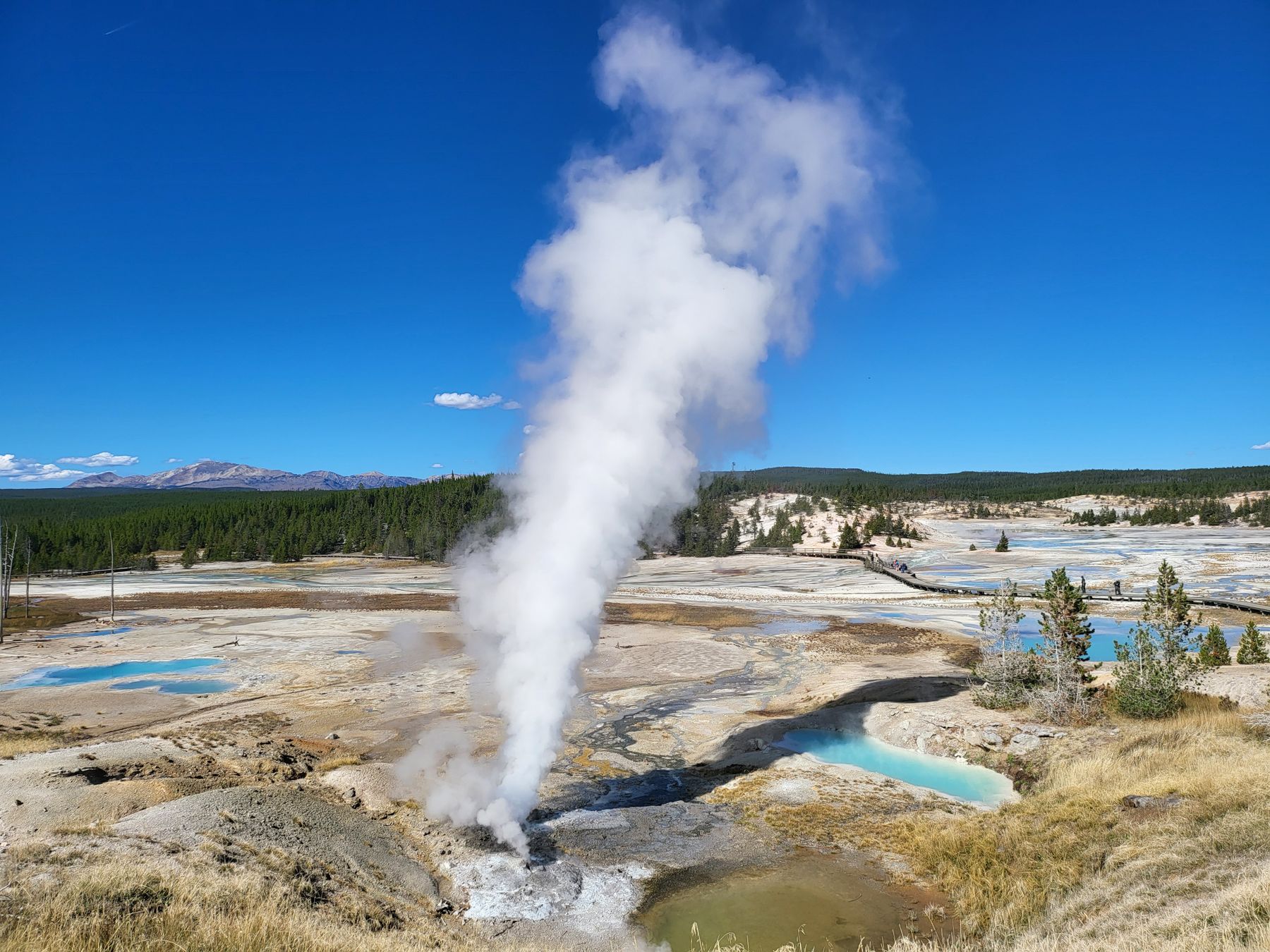
Yellowstone is a park where the day can change in the space of a few miles. One stop has steam drifting above a boardwalk. Another opens onto a waterfall and a deep canyon. Farther along, bison may be grazing beside a valley road, giving everyone a reason to slow down.
The secret to enjoying it is time. Yellowstone’s famous places are spread out, and a short distance on a map can involve parking, walking, waiting, road work, and wildlife delays. A good visit leaves room for those things.
This Yellowstone National Park travel guide covers the main places to visit, real photos, maps, seasons, entrance fees, accommodation areas, itineraries, sample costs, and practical travel tips. It is written for first-time visitors who want a useful plan without filling every minute.
First Trip to Yellowstone? Start Here
Allow three to five full park days for a varied first visit, choose accommodation around your daily route, and check seasonal road access before booking. Add arrival and departure travel separately.
For a summer driving trip, a stay divided between western, northern, and lake or canyon areas can reduce repeated journeys. For winter, start with a different transport plan. A summer sightseeing loop cannot simply be driven in January.
Choose one main area each day and keep an alternative. That gives you time to enjoy a geyser basin, stop for lunch, or wait safely while wildlife clears the road.
Yellowstone National Park at a Glance
| Planning question | Practical starting point |
|---|---|
| Location | Mainly Wyoming, with parts in Montana and Idaho |
| Suggested visit | Three to five full park days; add travel days |
| Main experiences | Geysers, hot springs, canyon views, waterfalls, lakes, and wildlife watching |
| Ordinary road-touring season | Compare late spring through early fall, checking each road’s actual opening dates |
| Main transport | A suitable car or a booked tour; there is no general public transport system inside the park |
| Useful overnight areas | West Yellowstone, Gardiner, and selected in-park accommodation |
| Standard private-vehicle entry | $35 for seven consecutive days; nonresident rules are explained below |
| Sample budget for two | $3,300 for seven days and six nights, including contingency; assumptions below |
| Time zone | Mountain Time; use the local time shown on tour and travel bookings |
| Book first | Accommodation or camping, a suitable vehicle, and any essential tour or winter transport |
Important fees, booking information, and seasonal road details were checked November 11, 2026. Recheck the National Park Service’s current information for your travel dates, especially for a 2027 trip or later.
Current Seasonal Access: A November 2026 Planning Note
Most Yellowstone roads and the West, South, and East entrances closed to ordinary vehicles on November 1, 2026. The northern road connecting Gardiner and Cooke City/Silver Gate remains the year-round car route, weather permitting, through the Mammoth, Tower Junction, and Lamar Valley areas.
That does not create a winter through-route beyond Cooke City. Roads outside the Northeast Entrance also have seasonal limits. Check the whole journey before leaving, including the approach from your accommodation.
The 2026–27 snowcoach and snowmobile season is scheduled to begin December 15, 2026, subject to conditions. Different oversnow routes have different March closing dates. Early November is therefore a transition period, rather than the start of ordinary summer driving or a guarantee of operating winter tours.
The five-day driving itinerary later in this guide is for a season when the roads and facilities it uses are open.
Table of Contents
- First Trip to Yellowstone? Start Here
- Yellowstone National Park at a Glance
- Current Seasonal Access: A November 2026 Planning Note
- How to Plan Your First Yellowstone Visit
- Best Time to Visit Yellowstone National Park
- Visiting Yellowstone in Winter
- Yellowstone Entrance Fees, Passes, and Reservations
- Where to Stay in Yellowstone and Nearby
- How to Get to Yellowstone National Park
- Which Yellowstone Entrance Should You Use?
- How to Get Around Yellowstone
- Best Places to Visit in Yellowstone
- Best Things to Do Beyond the Main Sights
- A Five-Day Yellowstone Itinerary for First-Time Visitors
- Yellowstone Plans for One, Three, and Seven Days
- Itinerary Maps and Realistic Travel Times
- How Much Does a Yellowstone Trip Cost?
- What and Where to Eat in Yellowstone
- Free and Budget-Friendly Yellowstone Experiences
- Yellowstone for Families, Couples, Solo Travelers, and Access Needs
- Wildlife Safety and Bear-Country Planning
- Best Photography Stops and Photo Etiquette
- Day Trips and Places to Combine With Yellowstone
- Essential Things to Know Before You Go
- What to Pack for Yellowstone
- Important Contacts and Official Resources
- Common Mistakes First-Time Yellowstone Visitors Make
- Frequently Asked Questions About Visiting Yellowstone
- Your Final Yellowstone Planning Checklist
- Reader Questions and Travel Experiences
- Explore More Go Travel Box Guides
- Leave a Reply
How to Plan Your First Yellowstone Visit
How Many Days Do You Need?
One day gives you a selected area, not the whole park. Two or three days can cover several major sights if you accept a busy pace. Five park days give a more comfortable introduction and more room for weather, rests, and changes of plan.
Count nights and usable days separately. A late flight followed by a gateway transfer is an arrival day. A day spent returning the car and flying home should not also be treated as a full park day.
A Step-by-Step Booking Checklist
- Decide whether you want an ordinary road trip, a northern winter visit, or a booked winter oversnow experience.
- Match the season and intended park areas to actual road and facility dates.
- Compare the full flight, rental, transfer, and accommodation cost together.
- Reserve the important rooms or campsites, checking cancellation terms.
- Book any specific tour, winter transport, or permitted activity your plan depends on.
- Save maps, room addresses, booking references, and current park information offline.
What Can You Decide After Arriving?
Many ordinary viewpoint stops, meal choices, and shorter outings can remain flexible. During the operating season, ranger advice and current geyser predictions can help shape a day. Do not leave a needed room, campsite, or essential winter transport to chance.
If an activity matters more than the rest of the trip, make that your priority. A wildlife-focused visit, a hiking holiday, and a first-time sightseeing trip may need different bases and daily schedules.
Best Time to Visit Yellowstone National Park
There is no single best month for every activity. The most useful question is which roads, services, and experiences you want. Even summer can bring cold mornings and changing conditions.
| Season | What can make it appealing | What needs careful checking |
|---|---|---|
| Spring | Returning road access, changing landscapes, and selected wildlife viewing | Roads open in stages; snow, limited services, and temporary closures |
| Summer | The broadest ordinary driving options and many operating facilities | Busy areas, parking, room prices, road work, and afternoon weather |
| Fall | Cooler days and a changing landscape | Shorter daylight, early snow, and facilities closing at different times |
| Winter | Snowy scenery and a very different park experience | Restricted car access, booked oversnow transport, cold, and limited services |
Peak, Shoulder, and Quieter Periods
Peak summer generally gives you more operating choices, along with more competition for rooms and parking. A shoulder-season trip can feel quieter, but that does not mean every famous sight is easy to reach.
Compare the total cost and experience. A cheaper room is less useful if the road needed to reach your main activity is closed. If visiting around a holiday or planning a seasonal event, check the current calendar and actual operating hours.
Visiting Yellowstone in Winter
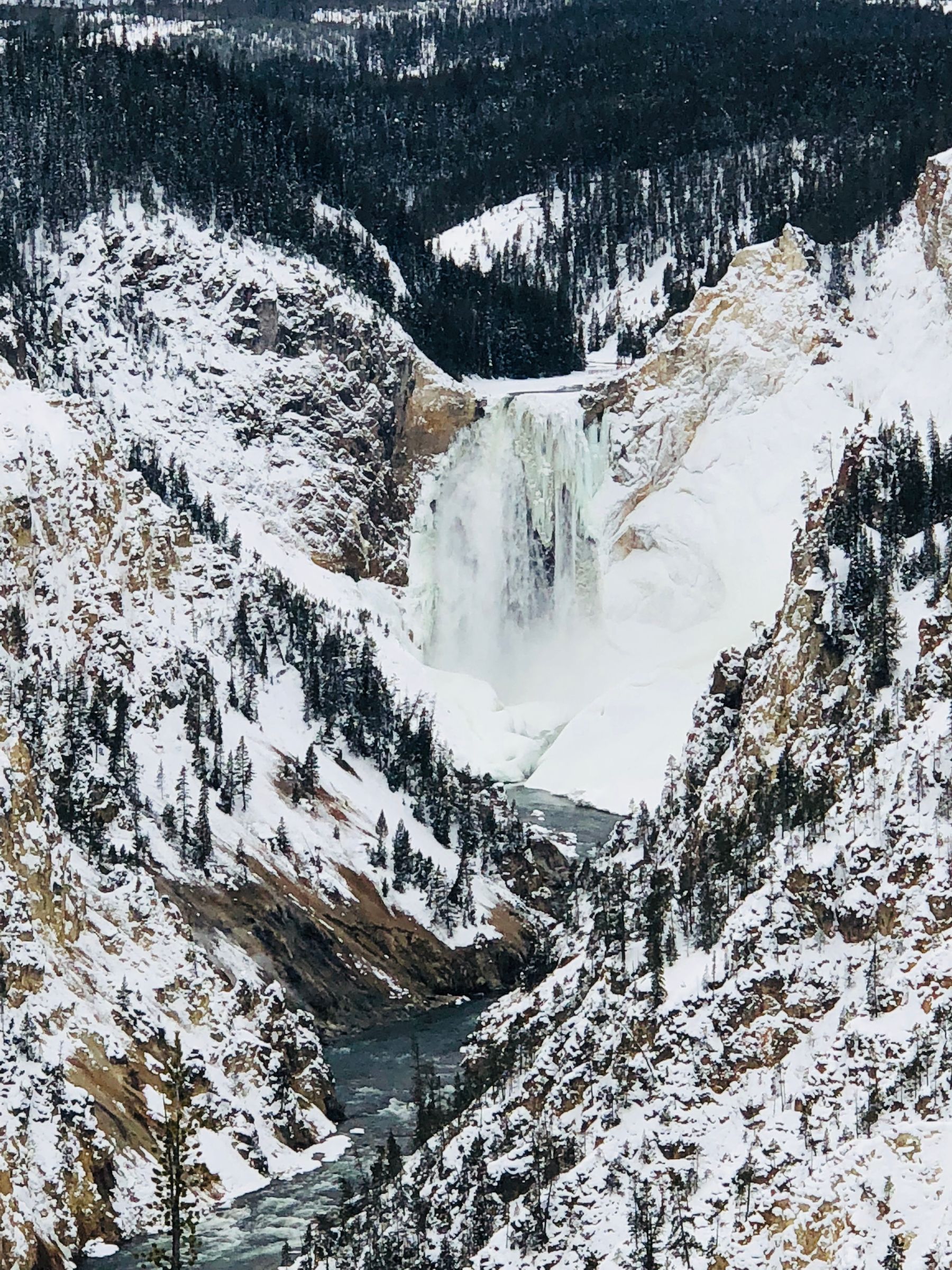
Begin by choosing the type of winter trip. A northern visit by car uses the Gardiner-to-Northeast-Entrance corridor when conditions allow. An Old Faithful winter visit usually depends on an appropriate booked snowcoach or other authorized oversnow arrangement.
Check exactly what a tour includes: collection point, transport, park entry, equipment, meals, stops, and cancellation terms. A room booking and an oversnow transfer are not automatically the same reservation.
Boardwalks and paths can be icy, and services are limited. Appropriate footwear, winter clothing, traction where suitable, and current local advice matter. The winter photograph shows a Yellowstone landscape in snow; it is not a promise that the same viewpoint will be reachable on your visit.
Yellowstone Entrance Fees, Passes, and Reservations
As checked November 11, 2026, Yellowstone does not require a general vehicle reservation to enter. You still need the applicable entrance payment or valid pass, and separate bookings or permits for particular services and activities.
| Item | Information checked November 11, 2026 |
|---|---|
| Standard private-vehicle pass | $35 for seven consecutive days for a qualifying private, noncommercial vehicle and its passengers |
| Resident annual America the Beautiful pass | $80 for eligible U.S. residents |
| Nonresident annual America the Beautiful pass | $250, with coverage under its current terms |
| Additional Yellowstone nonresident fee | $100 per non-U.S.-resident visitor aged 16 or older, unless covered by a qualifying pass or applicable exemption |
| General vehicle entry reservation | Not required under the rules checked |
| Camping, lodging, tours, and permits | Separate arrangements; an entrance pass does not reserve them |
For a short visit to Yellowstone alone, compare individual admission with a pass rather than assuming the annual option is cheaper. For example, two nonresident adults in one qualifying private vehicle would ordinarily total $235 before any applicable exemption or pass: $35 plus two $100 charges. A longer trip involving other affected parks changes that calculation.
Review the current rules for your party, vehicle, travel year, and any guided tour. Fee-free days have their own eligibility rules and do not remove all other costs.
Where to Stay in Yellowstone and Nearby
Choose a base by the places you want to visit. A room near a park entrance can still be a long way from the day’s main sight. Two or three well-chosen bases can work better than returning across the park every evening.
| Area | Why consider it | Main tradeoff |
|---|---|---|
| West Yellowstone | A gateway with accommodation, food, and supplies; useful for western park areas | Repeated entry and driving time, especially for northern and eastern outings |
| Gardiner and Mammoth area | A useful northern base, including the year-round road corridor | Longer transfers for many southern sights |
| Old Faithful area | Convenient for time in the Upper Geyser Basin | Limited seasonal accommodation and services; book the exact room type carefully |
| Canyon area | A practical focus for canyon visits and selected central park touring | Operating dates and room availability need checking |
| Lake Village or Grant area | Useful for lake-region outings and the southern part of a summer route | Seasonal services and longer transfers to northern sights |
| Cooke City/Silver Gate | Close to the Northeast Entrance and Lamar Valley approaches | Limited services and important winter road constraints beyond town |
Families, Couples, and Budget Travelers
Families may value a kitchen, laundry, and separate sleeping space. Couples may prefer a quieter room close to the area they want to enjoy. Budget travelers should include extra fuel, food choices, and driving time when comparing a more distant room.
Do not assume a historic lodge or cabin has air conditioning, a private bathroom, reliable Wi-Fi, or the same layout as a modern hotel. Confirm the room’s actual facilities, accessibility details, taxes, and cancellation terms.
Camping and the Summer 2027 Booking Change
NPS states that, beginning with the summer 2027 camping season, Yellowstone campground reservations will be handled through Recreation.gov, opening approximately six months ahead. Check the chosen campground’s own dates, release information, vehicle limits, and facilities.
Winter camping and limited first-come arrangements need a separate current check. Do not assume every campground is open or that an unreserved site will be available. Overnight parking and car camping are not permitted in ordinary pullouts, picnic areas, or parking lots.
How to Get to Yellowstone National Park
Airports and Gateway Choices
Compare airport, car, and room costs together. Air service and schedules can change, and the closest airport on a map is not automatically the best choice for your route.
| Airport or gateway | Useful starting point |
|---|---|
| Bozeman, Montana | Compare for West Yellowstone or Gardiner approaches, allowing time for the gateway transfer |
| Jackson, Wyoming | Useful for a southern approach or a separate Grand Teton visit when the route is open |
| Cody, Wyoming | Compare for an eastern approach during the appropriate road season |
| Idaho Falls, Idaho | Another option for a western approach with a longer transfer |
| Billings, Montana | Consider the complete approach and seasonal roads before booking |
| West Yellowstone airport | Seasonal service; check flights for the exact travel dates |
NPS lists year-round commercial air service at several regional airports, while West Yellowstone’s air service is seasonal. Confirm the airline’s current schedule and your rental collection hours before paying.
Driving, Buses, and Late Arrivals
There are commercial transport options to some gateway towns, but reaching a town is not the same as reaching all the park sights. Match any bus or shuttle to the next part of your journey.
For a late arrival, an airport-area overnight may be more comfortable than an unfamiliar rural drive after a long flight. Check lodging reception hours, food, fuel, road conditions, and the distance to the actual room.
Which Yellowstone Entrance Should You Use?
| Entrance | Approach to compare | Important limitation |
|---|---|---|
| North | Gardiner to Mammoth and the northern corridor | The year-round ordinary-car approach, subject to weather and temporary restrictions |
| West | West Yellowstone toward Madison and western routes | Seasonal closure to ordinary vehicles |
| South | Grand Teton/Jackson side toward West Thumb | Seasonal closure to ordinary vehicles |
| East | Cody side toward Fishing Bridge and the lake region | Seasonal pass and road conditions |
| Northeast | Cooke City/Silver Gate and Lamar Valley | Winter roads beyond Cooke City prevent an ordinary through-loop |
Check your whole approach, including roads outside Yellowstone. Navigation software may suggest a closed seasonal road or a route that is much less convenient than it looks.
How to Get Around Yellowstone
Yellowstone has no general public transportation system connecting the main sights. A suitable car or a booked tour is the practical choice for most independent sightseeing plans.
The main roads form a broad figure-eight arrangement, but that shape can be misleading. Do not plan a complete loop simply because it looks neat on a map. Choose a few areas, allow for parking and walking, and keep travel time separate from sightseeing time.
Ordinary drives between major areas can take an hour or more, and closures or wildlife delays can add substantially. Treat every estimate as an allowance rather than an appointment you can rely on.
For an accessible vehicle or tour, confirm the actual seating, boarding, storage, and assistance arrangements. A rental SUV does not authorize off-road travel, and a large camper needs a route and parking plan suited to its dimensions.
Best Places to Visit in Yellowstone
The nine areas below provide a varied first-visit plan. Ordinary viewing at these places falls under the applicable park-entry arrangements; separate tours, boating, equipment, camping, and permitted activities can cost extra. Road and trail access still need a current check.
1. Old Faithful and the Upper Geyser Basin
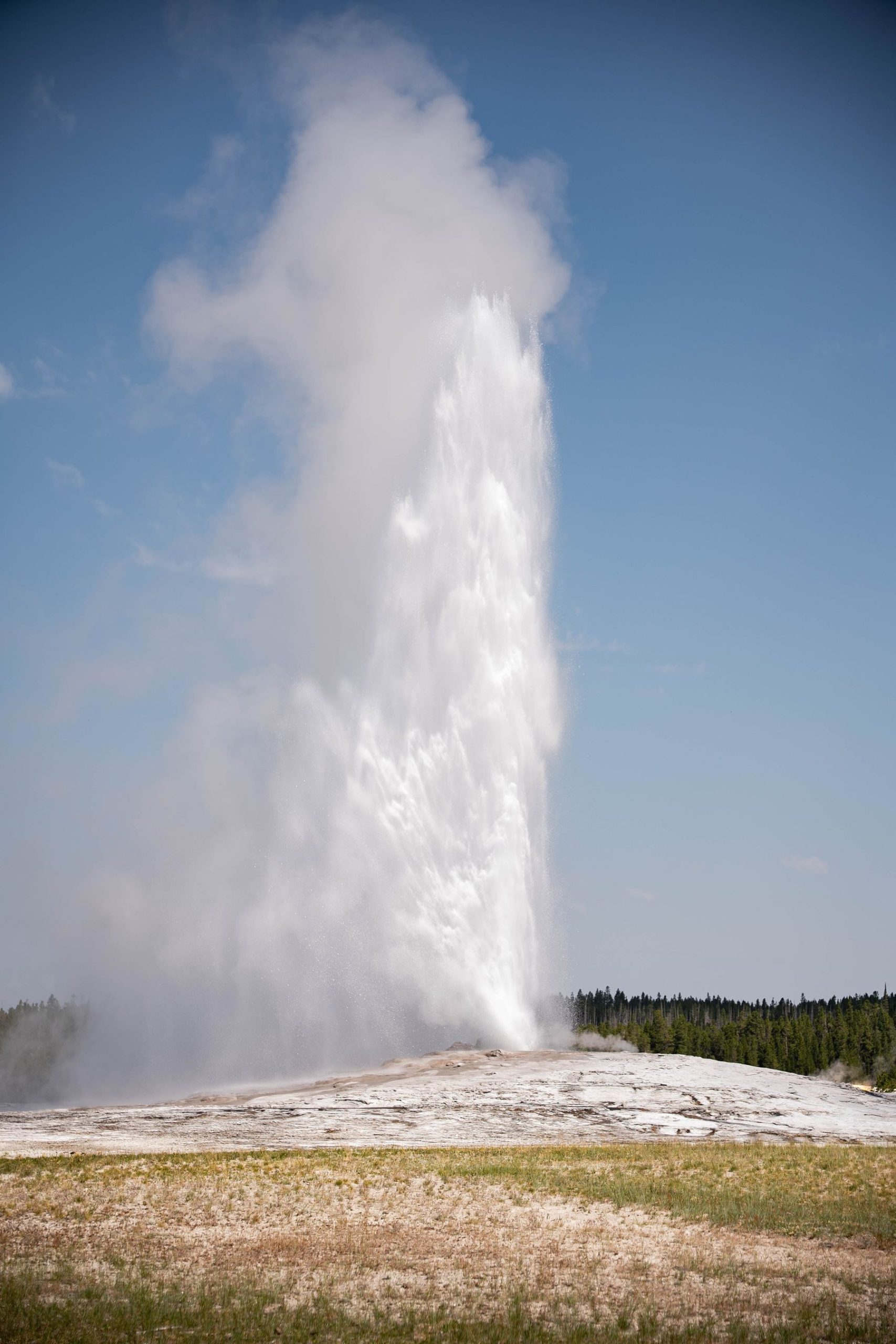
Old Faithful is worth allowing time for. Arrive, look at the current prediction, and make room for the wait rather than treating the eruption as a precisely timed appointment. Then explore a suitable part of the wider Upper Geyser Basin.
| Detail | First-visit advice |
|---|---|
| Why visit | A famous geyser and a wider landscape of thermal features |
| Best for | First-time visitors, geology interests, and a substantial sightseeing stop |
| Location and map | Old Faithful map |
| Suggested time | Three to four hours or longer with waiting, walks, and a meal |
| Getting there | Use the appropriate open road from the Madison or West Thumb side |
| Access | Viewing options near the geyser differ from longer basin routes; check the exact route and facilities |
| Nearby choice | Other suitable Upper Geyser Basin stops rather than an immediate long transfer |
NPS posts predictions during operating periods, but they are estimates. When the visitor education center is closed during seasonal transitions, an old prediction can remain displayed until a new one is available. Check the date as well as the time.
2. Grand Prismatic Spring and Midway Geyser Basin
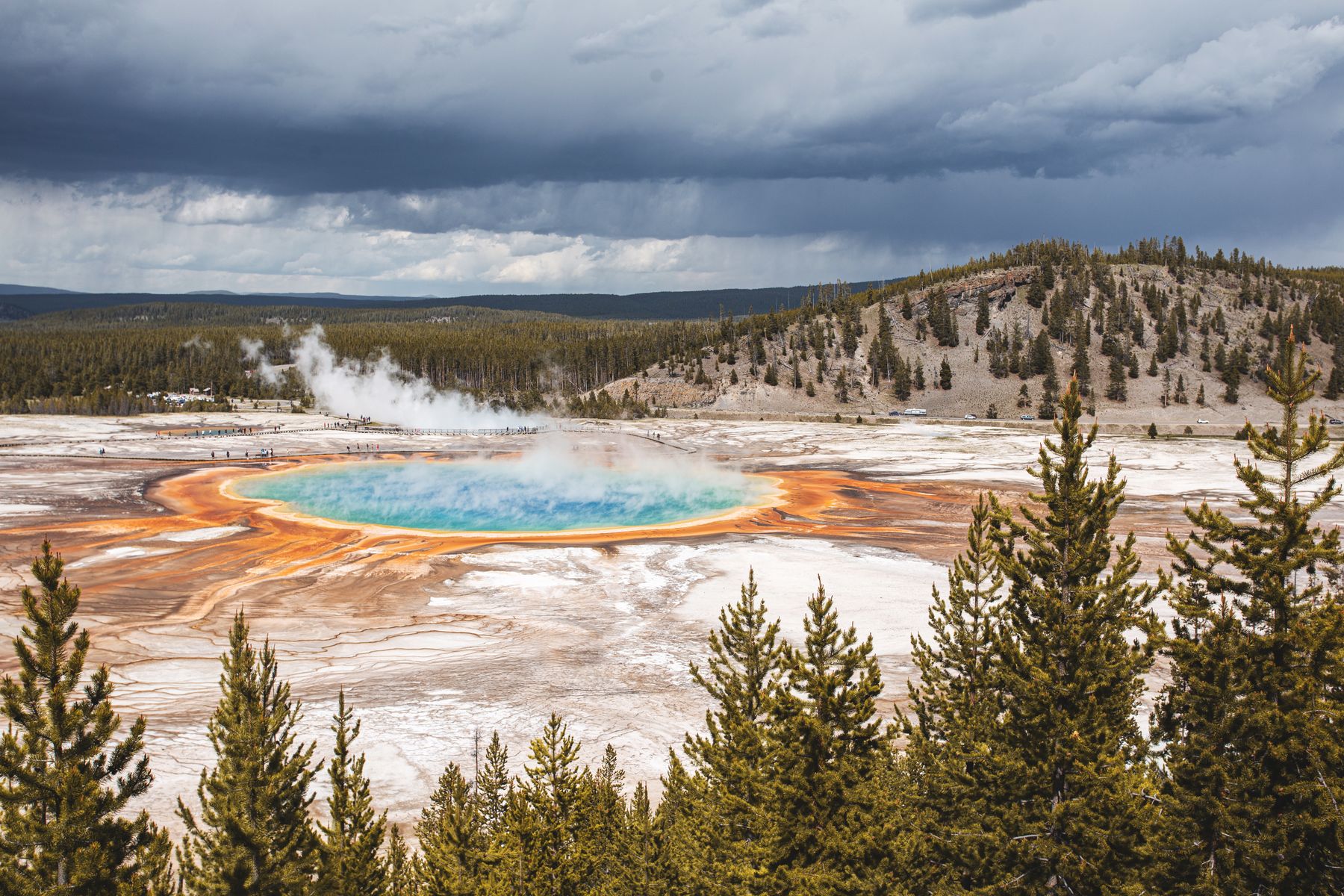
Grand Prismatic is known for color, but the view depends on weather, steam, light, and the route you choose. The Midway boardwalk and the separate overlook trail are different outings. A photo taken from above does not show the view you get from every point on the boardwalk.
| Detail | First-visit advice |
|---|---|
| Why visit | A major thermal spring and surrounding basin scenery |
| Best for | Geology, photography, and visitors who enjoy observing changing conditions |
| Location and map | Midway Geyser Basin map |
| Suggested time | One to two hours for a selected boardwalk visit; more if adding the separate overlook |
| Getting there | Plan legal parking at the correct location for the outing you want |
| Access | The overlook is a climbing trail, not the same route as the basin boardwalk |
| Nearby choice | Old Faithful area or another western thermal stop, depending on time |
The official overlook route is about 1.2 miles return from the Fairy Falls trailhead and gains about 105 feet. Check trail and bear-management closures before setting out. Do not leave a permitted route to find a clearer camera angle.
3. Grand Canyon of the Yellowstone and Lower Falls
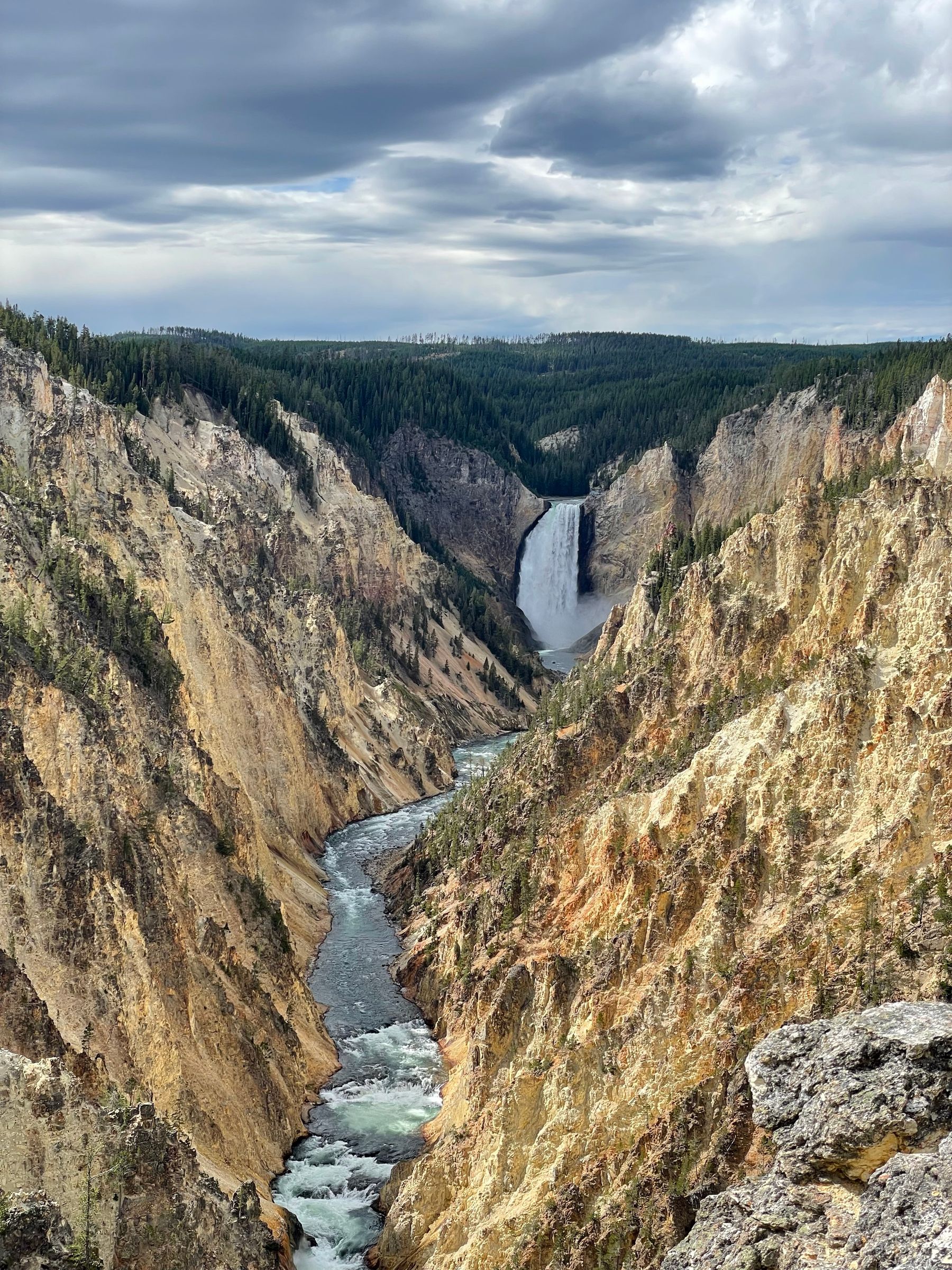
The canyon gives the trip a completely different feel from the geyser basins. Choose a few viewpoints and leave time to look at the river, waterfall, and changing rock colors. Artist Point is a well-known option, but it is not the only way to enjoy the area.
| Detail | First-visit advice |
|---|---|
| Why visit | Canyon walls, the Yellowstone River, and waterfall views |
| Best for | Viewpoint visits and selected walks matched to the group’s ability |
| Location and map | Artist Point map |
| Suggested time | Half a day for selected canyon stops; longer with substantial walks |
| Getting there | Use current Canyon-area road information and choose the correct rim |
| Access | NPS identifies accessible walkways to selected viewpoints, including Artist Point; other routes have steps or steep grades |
| Nearby choice | Canyon Village or a carefully chosen Hayden Valley stop |
Do not assume every route toward a waterfall is an easy walk. Look at the return climb, steps, surface, and current restrictions before leaving the parking area. Keep back from edges and use only open viewpoints.
4. Norris Geyser Basin
Norris has two main areas, Porcelain Basin and Back Basin. It is a good place to choose a manageable route and give it your full attention. Steam, color, sound, and the changing surface make the stop more interesting than a quick photograph from the entrance.
| Detail | First-visit advice |
|---|---|
| Why visit | A dynamic thermal landscape with different basin routes |
| Best for | Geology interests and visitors who want another substantial thermal outing |
| Location and map | Norris Geyser Basin map |
| Suggested time | One to three hours, depending on the route and conditions |
| Getting there | A useful stop on a western-to-northern transfer when roads are open |
| Access | Grades, steps, and route conditions vary; choose a specific route using current access information |
| Nearby choice | Mammoth area on a northbound plan, with transfer time included |
Stay on designated routes and follow temporary closures. Do not build the day around an expectation that every geyser will erupt while you are watching. A flexible visit is more rewarding than waiting for an event nobody can promise.
5. Mammoth Hot Springs
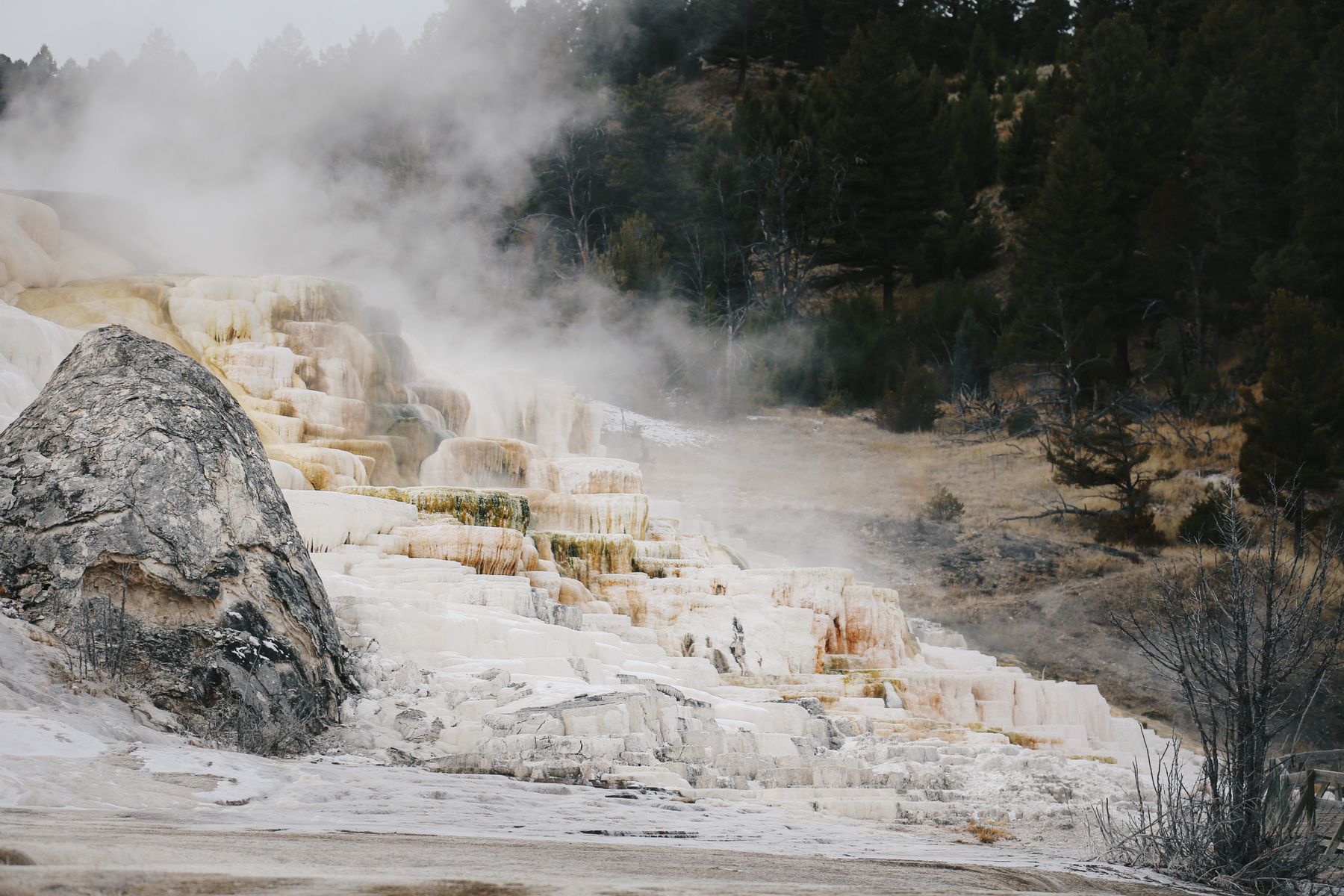
Mammoth’s terraces give you another view of Yellowstone’s thermal landscape. Rather than trying to walk every section, choose a route that suits your group and leave time for the surrounding historic area when facilities and conditions allow.
| Detail | First-visit advice |
|---|---|
| Why visit | Mineral terraces, thermal features, and the northern park setting |
| Best for | A northern sightseeing day and a different landscape from the geyser basins |
| Location and map | Mammoth Hot Springs map |
| Suggested time | One to three hours for a selected visit |
| Getting there | The Mammoth area is reached from Gardiner and the northern road corridor |
| Access | NPS identifies selected accessible terrace views; snow, transitions, and the chosen access point matter |
| Nearby choice | Albright Visitor Center or another suitable northern stop when operating |
The terraces change, and a feature’s appearance may differ from an older photograph. Keep away from elk and other wildlife in the developed area as well as in open valleys. A nearby building does not make an animal tame.
6. Lamar Valley
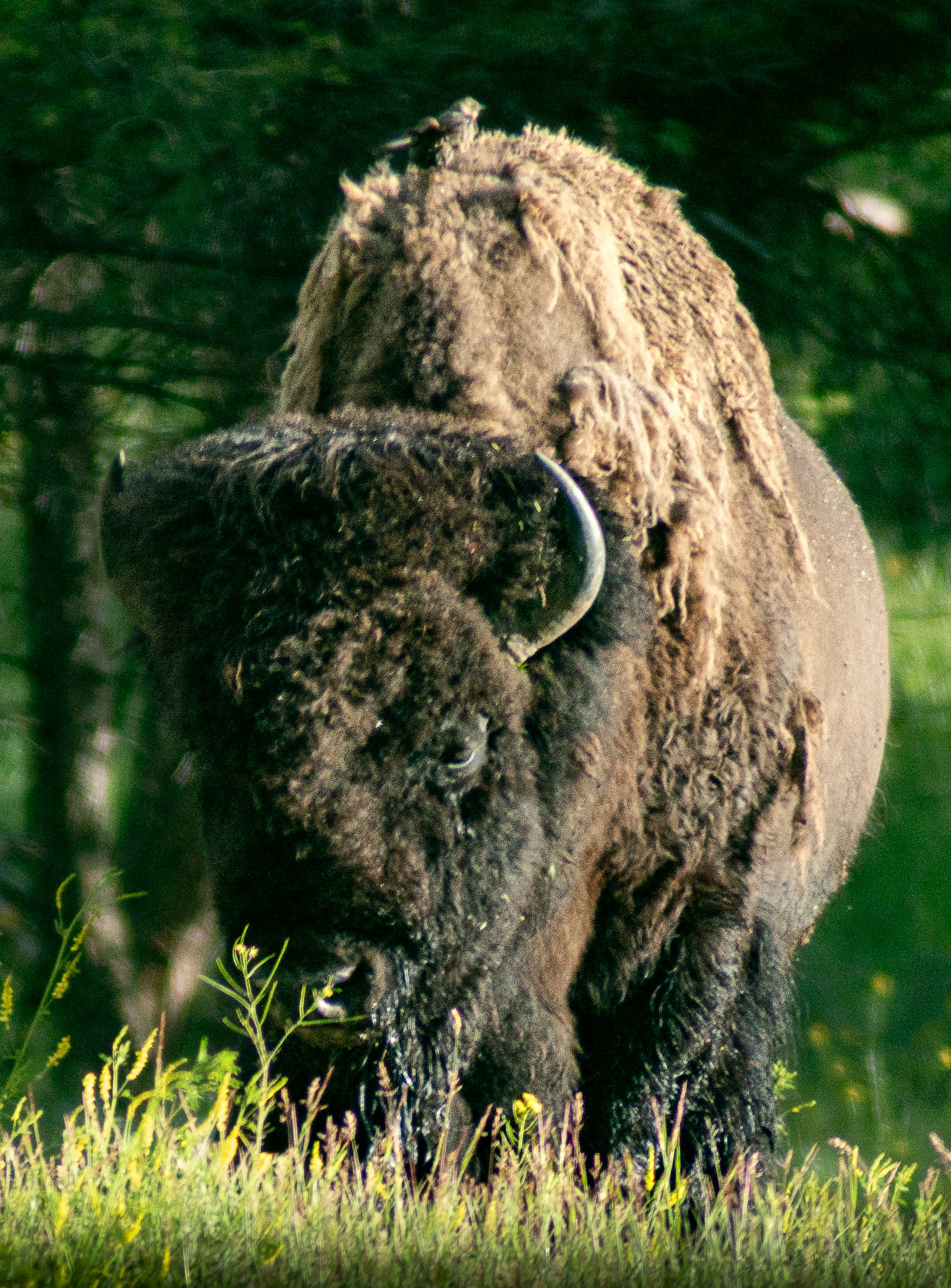
Lamar is a place to watch patiently. Bring binoculars, find a legal pullout, and give the landscape time. Bison may be the most obvious animals, while more distant wildlife can be difficult to identify without suitable optics or experienced guidance.
| Detail | First-visit advice |
|---|---|
| Why visit | Open northern landscapes and opportunities for distant wildlife viewing |
| Best for | Patient wildlife watchers and a northern park day |
| Location and map | Lamar Valley map |
| Suggested time | Two to four hours or more, plus travel from your base |
| Getting there | Use the open northern corridor and check your return route |
| Access | Choose a safe, legal pullout; vehicle-based viewing can be useful but facilities vary |
| Nearby choice | Tower Junction or a selected northern stop, subject to access |
Do not promise yourself a wolf or bear sighting. A guided outing may help with interpretation and equipment, but it cannot guarantee animals. Very early or late outings also mean additional driving considerations in darkness and wildlife country.
7. Hayden Valley
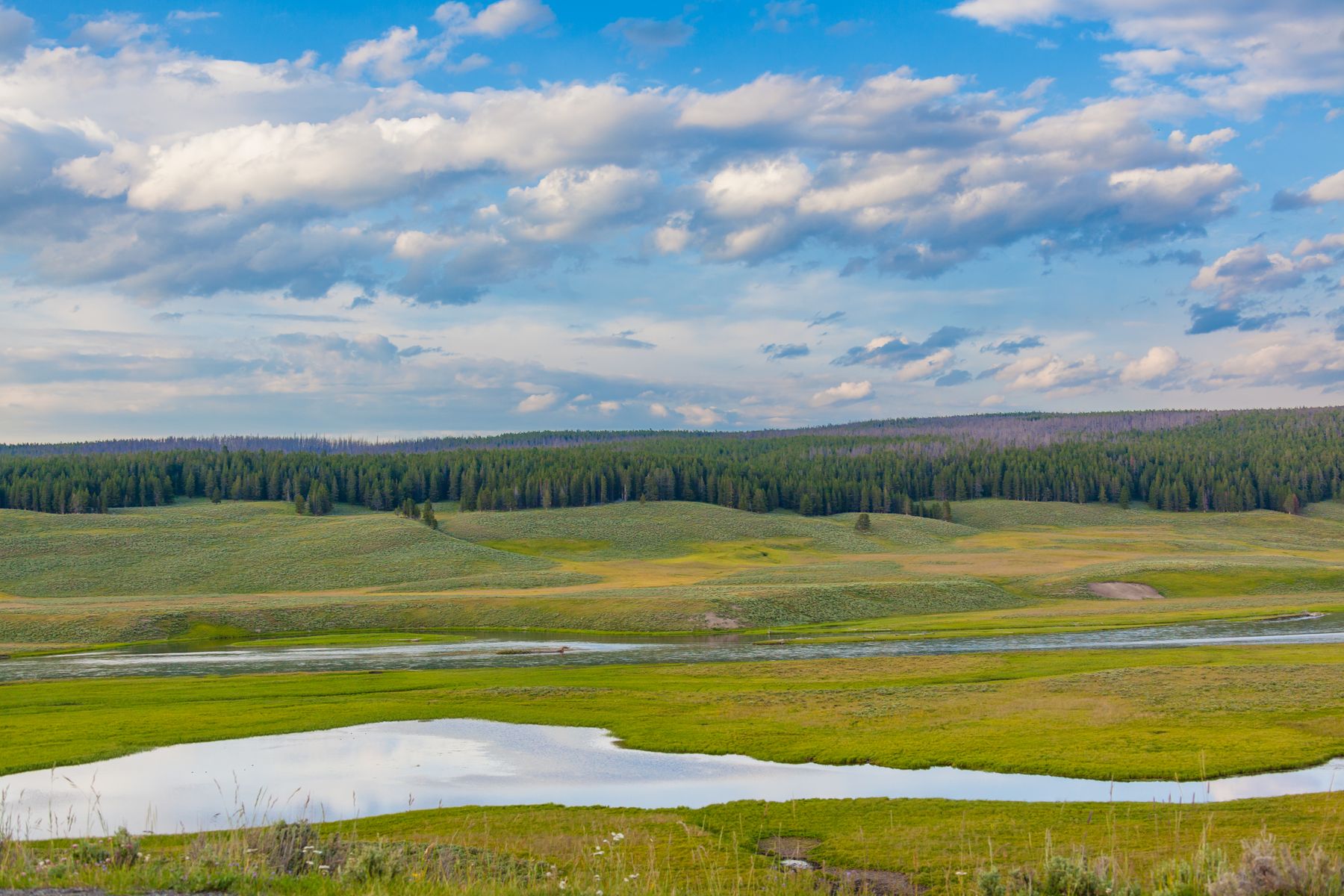
Hayden fits naturally into a route between the Canyon and lake areas when the road is open. Stop at a suitable legal viewpoint and take a wider look at the valley rather than searching only for a close animal photograph.
| Detail | First-visit advice |
|---|---|
| Why visit | Valley scenery, water, and possible wildlife sightings |
| Best for | A selected stop on a central-to-lake-region day |
| Location and map | Hayden Valley map |
| Suggested time | One to two hours of selected stops, with more for a dedicated wildlife outing |
| Getting there | The route between Canyon and the lake region is seasonal |
| Access | Pullouts differ; check the surface, safe space, and available restrooms |
| Nearby choice | Canyon viewpoints, Lake Village, or a separate appropriate Mud Volcano visit |
Keep the road clear and use a different stop if a pullout is full. Wildlife may cross unexpectedly, so a transfer through the valley can take longer than a navigation app suggests.
8. Yellowstone Lake
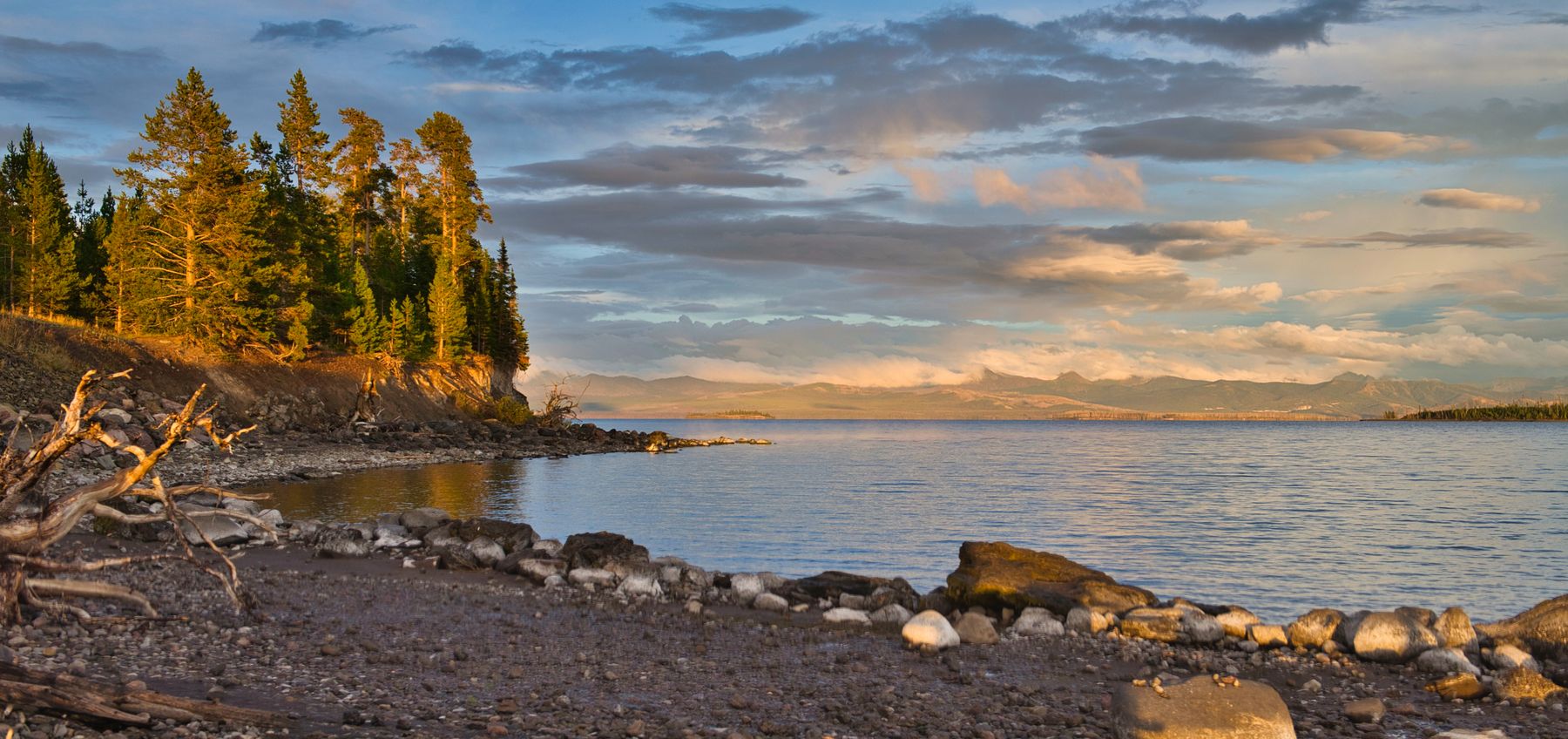
The lake is a good place to change pace after several thermal stops. Choose a suitable shoreline view, a visitor facility when open, or a booked activity that fits the conditions. A quiet break by the water can be more satisfying than another hurried drive.
| Detail | First-visit advice |
|---|---|
| Why visit | A broad lake landscape, surrounding mountains, and time at a slower pace |
| Best for | Scenic stops and a lake-area overnight |
| Location and map | Yellowstone Lake map |
| Suggested time | A few selected hours to half a day; more for a booked activity |
| Getting there | Choose the actual lake-area destination rather than a generic lake pin |
| Access | Ask about specific facilities and shoreline access; surfaces and services vary |
| Nearby choice | West Thumb, Fishing Bridge area, or Lake Village, depending on your route |
Cold water, weather, and boating rules need separate attention. Do not treat the lake as a casual swimming or boating stop without the right preparation. Tours, rentals, launch arrangements, and facilities have their own operating dates.
9. West Thumb Geyser Basin
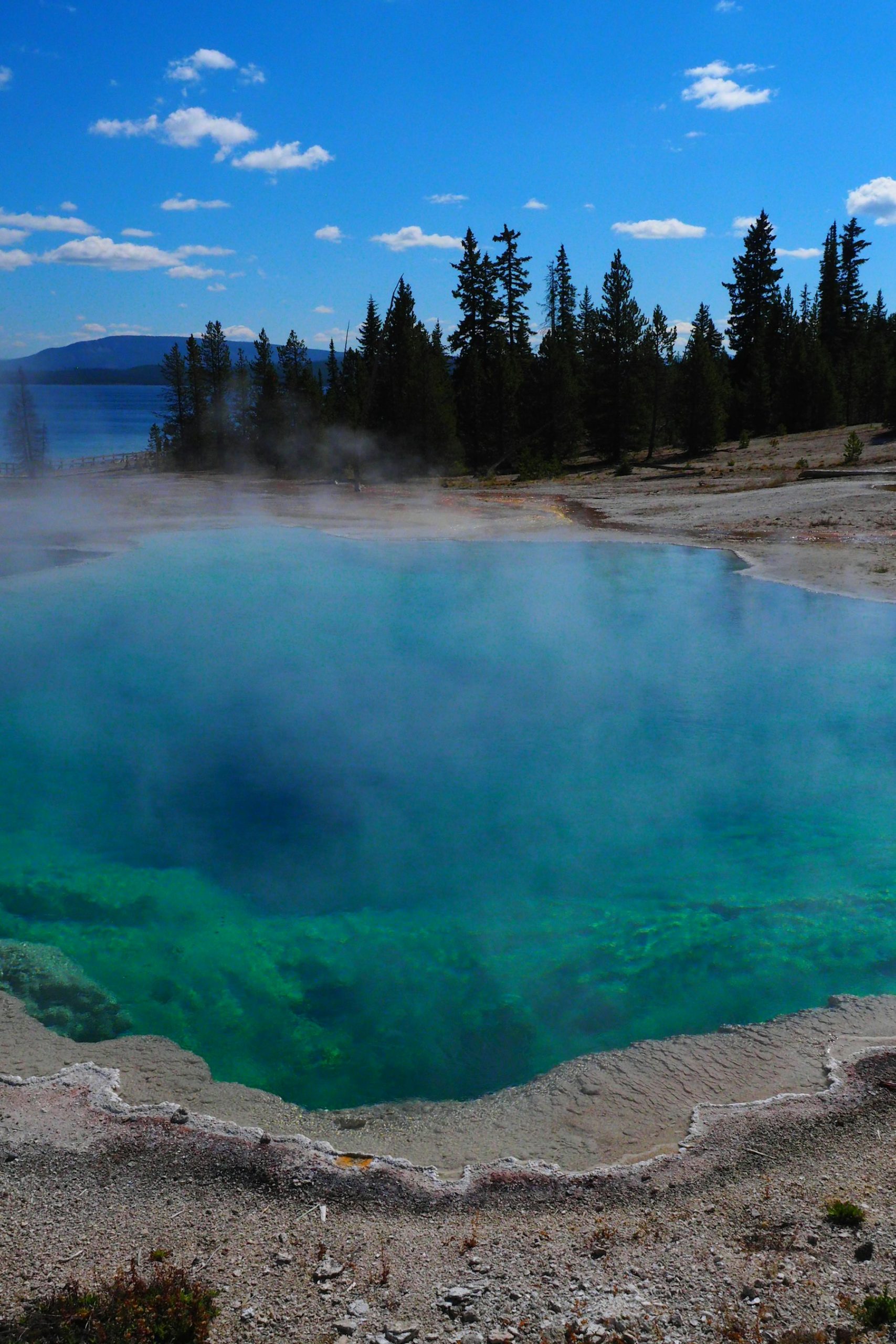
West Thumb brings thermal features and lake scenery into the same outing. A selected boardwalk visit can be an appealing part of a southern or lake-region day without adding a remote detour.
| Detail | First-visit advice |
|---|---|
| Why visit | Thermal pools beside Yellowstone Lake |
| Best for | A focused basin outing within a lake-region plan |
| Location and map | West Thumb Geyser Basin map |
| Suggested time | Roughly 45–90 minutes for a selected visit, plus parking and breaks |
| Getting there | Use the appropriate open road from the lake, South Entrance, or Old Faithful side |
| Access | Check the current boardwalk route, grades, surfaces, and parking arrangements |
| Nearby choice | A selected Yellowstone Lake stop or the onward journey suited to your route |
Stay on the boardwalk and do not touch thermal water or runoff. A calm-looking pool is not a bathing spot. Ice, snow, weather, or local restrictions can change the outing substantially.
Best Things to Do Beyond the Main Sights
Join a Ranger Program
A talk or walk can help explain the landscape and the park’s history. Check the current program, meeting point, effort level, and accessibility details. Many services and programs operate seasonally, so do not assume a summer schedule applies to another month.
Choose a Suitable Hike
Pick the route for the whole group, not only the most energetic walker. Check the distance, return climb, surface, weather, bear-management closures, and any backcountry requirements. A short distance does not automatically mean an easy or currently open trail.
Consider a Guided Wildlife or Winter Outing
Compare the operator’s authorized activity, vehicle, collection point, equipment, group size, and cancellation policy. Ask what is actually included in the price. Clear expectations matter more than a promise of a particular animal or a perfect weather day.
Explore History and Cultural Context
Make time for appropriate visitor-center exhibits and historical interpretation when facilities are open. Yellowstone is a living landscape with a human history, not only a collection of scenic stops. Follow current guidance around cultural places and leave objects where they belong.
A Five-Day Yellowstone Itinerary for First-Time Visitors
This plan provides five full park days, with arrival before day one and departure after day five. It is designed for a season when the roads and services used are open. It does not apply to the ordinary winter driving network.
A useful starting point is two nights in a western base, two in a northern base, and two in the lake region. That gives six nights around five park days. Adjust the pattern to actual room availability, travel time, and the airport you choose.
| Park day | Main focus | Practical plan | Suggested overnight area |
|---|---|---|---|
| Day 1 | Old Faithful and the Upper Geyser Basin | Check current predictions, choose a basin route, and leave time for lunch and waiting | Western base |
| Day 2 | Midway and Norris | Choose the Grand Prismatic outing you want, then a suitable Norris route before traveling north | Northern base |
| Day 3 | Mammoth and a selected northern-valley outing | Visit a suitable terrace area and allow a substantial part of the day for the Lamar journey and stops | Northern base |
| Day 4 | Canyon, then the lake-region transfer | Choose canyon viewpoints, with a selected Hayden stop only if time and conditions suit | Lake-region base |
| Day 5 | Lake and West Thumb | A slower lake-region day with suitable stops and room for rest | Lake-region base or a revised departure base |
Arrival, Departure, and the Last Night
With an arrival day and a departure day, this becomes a seven-day trip. Those travel days may still be long. A lake-region finish can mean a substantial return journey to a northern or western airport.
If your flight would make that final drive hurried, add an airport-area overnight or shorten the last park day and change the final room. Do not book an early flight on the assumption that the drive will match the best time shown by a map app.
Keep One Main Outing Each Day
The itinerary is a framework. A full parking area, tired child, icy path, or wildlife delay is a reason to adjust. Remove an extra stop before you remove lunch, rest, or a sensible return time.
Yellowstone Plans for One, Three, and Seven Days
| Time available | A sensible approach |
|---|---|
| One park day | Choose one main region according to your entrance and season; accept that other major sights will wait |
| Three park days | Compare a western thermal day, a canyon/lake day, and a northern day; reduce walking and stops rather than attempting every area |
| Five park days | Use the fuller route above with time for selected sights and a change of pace |
| Seven full park days | Add a rest period, a chosen hike or tour, and weather flexibility instead of automatically adding distant destinations |
Three park days can still involve considerable driving. Make the hotel pattern work with the route, and leave out an area if the transfer would dominate the day.
For a slower trip, use fewer daily activities and consider more nights in one convenient area. For some groups, the easiest plan is to see fewer places with enough time to enjoy them.
Itinerary Maps and Realistic Travel Times
Save the route in sections and use your actual room address. Google Maps is useful for locations and broad routing, but current park road information and signs decide which journeys are possible.
- West Yellowstone to Old Faithful route
- Midway to Norris and Mammoth route
- Mammoth to Lamar Valley route
- Canyon to Lake Village via Hayden Valley
- Lake Village to West Thumb route
Allow substantial extra time for meaningful stops, parking, meals, and road delays. A route that looks short may cross a busy park area or use a seasonal road. Download the necessary map areas and keep room details and key bookings available without a signal.
How Much Does a Yellowstone Trip Cost?
This illustrative budget covers two adults sharing a room and car for seven days and six nights. It assumes a summer-style regional trip, eligibility for ordinary U.S.-resident admission, and a $35 vehicle entrance payment rather than an annual pass. These are planning allowances, not current hotel or rental quotations.
| Item | Assumption | Total for two |
|---|---|---|
| Accommodation | Six nights averaging $210, including estimated room taxes | $1,260 |
| Food | $50 per person per day, with dining taxes and tips within the allowance | $700 |
| Rental car | Seven days averaging $85, including estimated taxes and selected protection | $595 |
| Fuel | Regional transfers and local park driving | $225 |
| Yellowstone entry | One qualifying private vehicle for seven days | $35 |
| Laundry and small travel costs | Illustrative allowance | $35 |
| Selected activities | Modest paid-activity allowance | $150 |
| Subtotal | Before contingency | $3,000 |
| Contingency | Ten percent | $300 |
| Planning total | Seven days for two adults | $3,300 |
This excludes flights, extra nights, shopping, one-way car charges, Grand Teton admission where applicable, specialist equipment, and tours above the stated activity allowance. Nonresident fees or a different pass purchase change the admission calculation. Winter oversnow trips need their own transport and accommodation budget.
A convenient peak-season room can cost much more than the sample average. Get real accommodation and rental quotes before committing to the flight. If the necessary final airport night adds a day, add its room, car, and food costs too.
Budget, Midrange, and Higher-Cost Choices
Camping or simpler gateway accommodation may reduce room costs, but equipment, food storage, and extra driving still matter. Midrange rooms can offer comfort without eliminating long transfers. Premium rooms, private tours, and a highly convenient location can increase the total substantially.
Compare total prices, not just the number beside the room type. Taxes, cleaning fees, parking where applicable, selected insurance, extra drivers, and rental return charges can all affect the result.
What and Where to Eat in Yellowstone
Plan food around the area you will actually visit. In-park dining, stores, and fuel services have separate operating dates. A restaurant that appears on a map may be closed for the season or have shorter hours than you expect.
Gateway towns can be useful for groceries, a cooler, and a meal before entering the park. A simple breakfast, packed lunch, and relaxed dinner work well for many sightseeing days. Check whether an important lodge meal needs a reservation.
Vegetarian, vegan, halal, and allergy-sensitive travelers should review actual menus and preparation arrangements ahead of time. A dietary label does not settle every cross-contact question. Carry a suitable backup meal and necessary medication.
Use confirmed drinking-water facilities and carry enough for the outing. Keep food, rubbish, and coolers stored according to park rules, including during short stops. Do not leave food out for wildlife.
Free and Budget-Friendly Yellowstone Experiences
Once the applicable entrance requirement is covered, ordinary basin visits, many viewpoints, and suitable walks do not require a separate guided-tour ticket. A well-chosen day with fewer stops can be both cheaper and more enjoyable than paying for activities to fill every gap.
Bring a picnic, refill water where safe facilities are available, and compare a pass against the parks on your actual trip. Do not buy an annual pass only because it sounds like the standard choice.
Save money by choosing a manageable region and avoiding unnecessary hotel changes. A room far from the day’s destination may add enough driving to cancel some of its price advantage. Never use an unauthorized overnight parking spot or closed route as a budget shortcut.
Yellowstone for Families, Couples, Solo Travelers, and Access Needs
| Traveler | A useful approach |
|---|---|
| Families | Shorter outings, regular food and restroom stops, and time for children to rest |
| Couples | A comfortable base, a selected walk or viewpoint, and less rushing between rooms |
| Solo travelers | Share the route with someone trusted and choose outings conservatively |
| Groups | Agree on walking ability, driving limits, food needs, and meeting points |
| Travelers with access needs | Verify the exact room, vehicle, parking, path surface, grade, and restroom facilities |
| Visitors who prefer less walking | Build the plan around suitable viewpoints and verified shorter routes |
Accessible Activities and Less Walking
Yellowstone provides accessible facilities and routes in selected areas, but not every feature meets every visitor’s needs. A boardwalk can have grades or uneven transitions. An accessible room does not establish that every nearby outing will work for you.
Use the current NPS accessibility information and the park app to choose specific stops. Ask detailed questions about the route from parking, steps, slopes, toilets, and assistance. Confirm any mobility equipment arrangement before relying on it.
Traveling With Pets
Pets need a separate park-specific plan. They are not allowed on Yellowstone’s thermal boardwalks, even when carried, and many intended activities will therefore be unsuitable with a pet. Check current rules and accommodation arrangements before booking. Do not rely on leaving an animal in a vehicle while you explore.
Wildlife Safety and Bear-Country Planning
Yellowstone requires at least 100 yards, or 91 meters, from bears, wolves, and cougars, and at least 25 yards, or 23 meters, from other wildlife, including bison and elk. If an animal comes closer, create distance rather than approaching for a photograph.
Use binoculars or a suitable lens and stay in a safe legal viewing place. Never feed animals or block traffic. Wildlife is still wild around lodges, roads, and parking areas.
For walks, follow current park bear-country advice and arrange appropriate bear spray locally where recommended. Learn its correct use and transport arrangements. Keep the group together and food attended and stored as required. If an outing exceeds your preparation or comfort, choose another plan.
Best Photography Stops and Photo Etiquette
Old Faithful, the thermal basins, canyon viewpoints, the lake, and the northern valleys all offer possibilities. Light, steam, weather, and the position of wildlife affect the result. A good trip should not depend on recreating one photograph exactly.
Use legal parking, keep paths clear, and remain on designated surfaces. Do not enter thermal ground or a closed area for a better angle. A popular image online is not proof that a viewpoint is safe or permitted.
Check current drone and other photography restrictions before considering equipment use. Give other visitors space, follow cultural guidance, and leave natural objects where they belong.
Day Trips and Places to Combine With Yellowstone
Grand Teton National Park
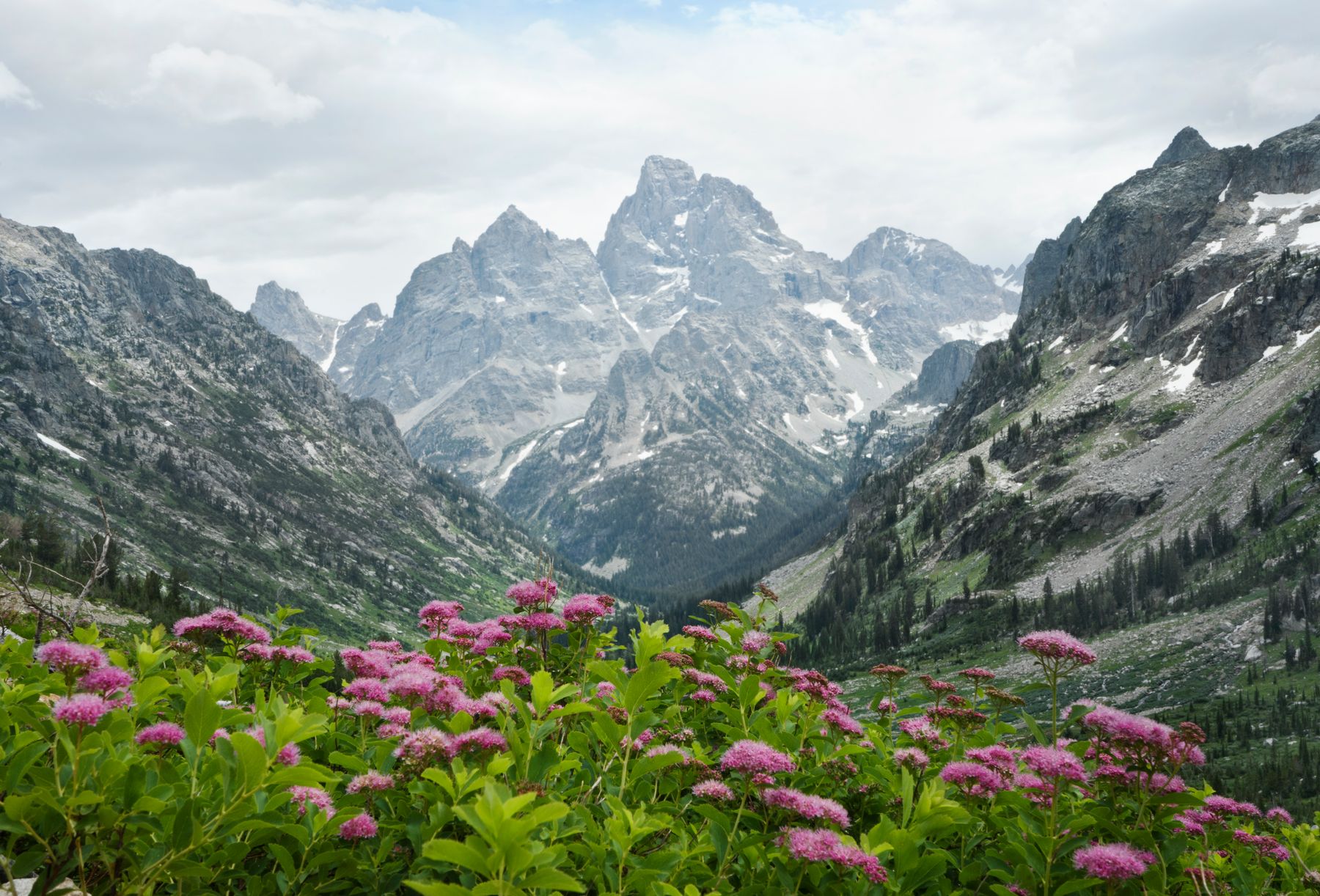
Grand Teton is a logical addition to an appropriate southern summer route, but it is a separate national park with separate entrance arrangements. Add meaningful time rather than attaching it to an already full Yellowstone day.
Compare its lakes, mountain viewpoints, and suitable activities with your interests. A trip that includes both parks needs room for the transfer, accommodation, park fees, and the airport journey. The South Entrance route is not an ordinary winter car connection.
Gateway Towns and Scenic Roads
West Yellowstone, Gardiner, Cody, Jackson, and Cooke City/Silver Gate offer different kinds of stops. Choose one because it fits the route, rather than treating all of them as nearby additions.
Beartooth Highway and other regional mountain roads have short and changing seasons. Check current access and vehicle requirements. If a scenic road is closed, do not let a navigation app turn a simple day into an unsuitable remote detour.
Essential Things to Know Before You Go
Weather, Water, and Thermal Areas
Carry layers and suitable weather protection, even when the afternoon forecast looks comfortable. Higher elevations, exposed places, rain, snow, and fast-changing conditions can affect the plan.
Thermal pools and runoff are not safe bathing areas. Stay on designated boardwalks and trails, supervise children closely, and never touch thermal water. Follow closures and leave an area if conditions or park guidance make the outing unsuitable.
Mobile Service, Maps, and Charging
Mobile coverage and Wi-Fi can be unreliable. Save map areas, room addresses, permits, confirmations, and important contacts offline. Bring a charging cable and power bank rather than relying on a phone that has spent all day navigating and taking pictures.
Documents, Payments, and Practical Facilities
International visitors should check current U.S. entry and driving-document requirements through official services. Keep the identification and documents required for your rental, pass, and bookings available.
Prices are in U.S. dollars. Check the payment arrangements at the actual service you intend to use. Use developed areas for restrooms and supplies before a longer outing, and do not assume seasonal toilets, shops, luggage storage, or fuel services will be available.
What to Pack for Yellowstone
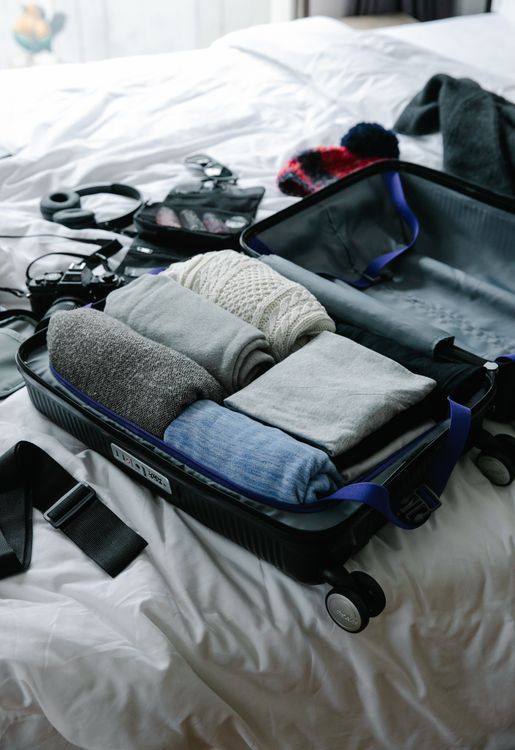
- Comfortable footwear with suitable grip and layers for changing conditions.
- Weather protection, sun protection, and clothing suited to the actual outing.
- Enough drinking water, food, and a cooler where practical.
- Offline maps, a charging cable, a power bank, and saved accommodation details.
- Identification, park passes, rental documents, and separate activity confirmations.
- Necessary medicines, a small first-aid kit, children’s supplies, and equipment for personal access needs.
- Bear-country equipment appropriate to the plan, with correct use and local transport arrangements understood.
Winter travel needs a separate cold-weather packing plan. A river outing, backcountry hike, or other specialist activity also needs preparation beyond this general sightseeing list.
Important Contacts and Official Resources
| Need | Contact or resource checked November 11, 2026 |
|---|---|
| Emergency assistance | 911, when a connection is available |
| Recorded Yellowstone park information | (307) 344-7381 |
| Recorded road updates | (307) 344-2117 |
| Current park rules and conditions | National Park Service Yellowstone alerts, road status, operating dates, and fee information |
| Summer 2027 campground bookings | Recreation.gov, following the selected campground’s current instructions |
| Rental, hotel, airline, and insurance help | Save the support details from your own bookings offline |
For an emergency, give the road or trail, nearest identifiable location, and the nature of the problem. A general information line is not a substitute for emergency assistance.
Visitor centers can help with planning when operating, but opening hours vary. Do not base an essential safety or travel arrangement on finding a particular building open after arrival.
Common Mistakes First-Time Yellowstone Visitors Make
- Trying to drive a complete park loop and visit every major sight in one day.
- Confusing a park’s year-round opening with year-round access to every entrance and road.
- Choosing accommodation by price without checking the daily transfer.
- Treating a geyser prediction or wildlife sighting as guaranteed.
- Forgetting that a viewpoint, an overlook trail, and a longer hike are different outings.
- Assuming a room, campsite, pass, permit, and winter transfer are the same booking.
- Relying on a mobile signal, one food outlet, or the final fuel stop being open.
- Leaving an early flight after a final night far from the airport.
Frequently Asked Questions About Visiting Yellowstone
Is Yellowstone Good for First-Time National Park Visitors?
Yes, when the plan suits your season and ability. Its variety is appealing, but the distances, weather, and seasonal access need attention. Choose a few areas and give them time.
How Many Days Should You Stay?
Three to five full park days are a useful starting point for a varied ordinary road trip. Add arrival and departure time. A shorter visit should focus on fewer areas.
Do You Need a Reservation to Enter Yellowstone?
Under the rules checked November 11, 2026, a general vehicle reservation is not required. An entrance payment or valid pass is still needed, and accommodation, camping, tours, and particular activities have separate arrangements. Recheck your travel-year rules.
Where Should First-Time Visitors Stay?
Compare a western base, a northern base, and in-park options around the route you want. Splitting a longer visit can reduce repeated travel. Check the actual room location and operating dates before booking.
Can You Visit Yellowstone Without a Car?
It is possible with a suitable tour and transport plan, but the park has no general public transport network between its main sights. Confirm how you will get from the airport or gateway town to each part of the visit.
Can You Drive to Old Faithful in Winter?
Not as an ordinary summer-style car journey. Most interior roads close to regular vehicles, and winter access usually requires an appropriate authorized oversnow arrangement when the season is operating. The northern car corridor is a different route.
What Is the Difference Between Lamar and Hayden Valleys?
Both offer landscape and wildlife-viewing opportunities, but they sit in different parts of the route. Lamar fits a northern day, while Hayden lies between the Canyon and lake areas. Neither guarantees a particular animal sighting.
Are Yellowstone and Grand Teton Covered by One Vehicle Entrance Fee?
They are separate parks with separate standard entrance fees. A qualifying annual pass may cover eligible entry under its terms, but it does not replace every activity or reservation charge. Compare the current rules before buying.
What Should You Do in Bad Weather?
Use an appropriate open visitor facility, a suitable nearby activity, or a rest period if available. Do not replace a closed route with an unfamiliar remote road. Severe conditions can mean canceling the day’s outing.
Can You Enjoy Yellowstone With Less Walking?
Yes, by choosing suitable viewpoints, selected basin routes, and facilities matched to your needs. Check the actual parking-to-view distance, surface, grade, steps, and restrooms rather than assuming every famous stop is easy to access.
Your Final Yellowstone Planning Checklist
- Confirm the season, entrance, and roads needed for your actual route.
- Count full park days separately from airport and gateway transfers.
- Reserve suitable accommodation or camping and essential transport.
- Check entrance fees, pass eligibility, separate permits, and activity bookings.
- Save maps, room addresses, road information, and key contacts offline.
- Plan food, fuel, water, clothing, and bear-country preparation.
- Keep a simpler alternative for each day and a realistic final departure plan.
Reader Questions and Travel Experiences
A useful planning lesson comes directly from the park’s Old Faithful information: a displayed prediction can remain after the visitor education center closes for a seasonal transition. Looking at the date can be just as important as looking at the predicted time. Small checks like that help a real visit run more smoothly.
Have you visited Yellowstone? Share your travel month, overnight areas, and what you would change about the pace. Genuine experiences about family travel, access needs, winter transport, and road delays are welcome. Keep personal booking details out of public comments.
Explore More Go Travel Box Guides
Compare your next trip with Top 20 National Parks to Visit in the United States and National Parks Road Trip Through Utah’s Mighty Five.
For more route ideas, explore Best Scenic Drives in the United States and Best Road Trips from Los Angeles. You can also start with 25 Best Places to Visit in the USA or browse our National Parks guides.
Leave a Reply
How many days do you have for Yellowstone, and what would you most like to see? Add your planning question or genuine travel experience below.
What would you like to know before you go?
Send us your question, feedback, or a place you would like to see covered.
Ask a travel question
Leave a Reply