Written by Ari Mayzick · Go Travel Box
Published November 12, 2026 · Updated November 12, 2026
Waterfalls have a way of making you stop talking for a moment. There is the sound, the movement, the cool air near the water, and the simple pleasure of watching a landscape do something dramatic.
The most beautiful waterfalls in the United States offer very different trips. Some have close-to-parking viewpoints. Others involve mountain trails, flights, or a demanding reserved overnight journey. This guide compares 12 worthwhile choices so you can pick the right experience for your time, budget, and ability.
The list is a travel selection rather than an official ranking. Planning details were checked on November 11, 2026. Water flow, road access, trail closures, and booking systems change, so confirm current conditions before traveling.
Planning Your First Waterfall Trip? Start Here
Choose one region and the kind of outing you want. A comfortable viewpoint visit, a forest walk, and an overnight canyon hike need very different plans.
Think about the season as carefully as the destination. Snowmelt can create powerful spring waterfalls, while a dry late-summer visit may look very different from a photograph. Heavy rain can increase flow and also bring flooding, slippery paths, or closures.
Start with a manageable route, a suitable season, and enough time to enjoy the place without rushing toward the next stop.
U.S. Waterfall Trips at a Glance
| Planning question | Quick answer |
|---|---|
| Number of destinations in this guide | 12 waterfalls across several regions |
| Good first-trip length | Three to five days within one region |
| Easier viewing options | Selected viewpoints at Niagara, Snoqualmie, Shoshone, and Looking Glass |
| Hike-based options | Examples include Myrtle Falls and chosen Silver Falls routes |
| Major advance-planning destination | Havasu Falls on the Havasupai Reservation |
| Waterfall flow | Depends on snowpack, rainfall, season, and sometimes water management |
| Main transport | Usually a car; island and remote trips need additional arrangements |
| Booking checks | Park entry, parking, timed access, activity tickets, and Tribal reservations are separate |
| Key safety rule | Use designated viewpoints and stay away from slippery edges and swift water |
Table of Contents
- Planning Your First Waterfall Trip? Start Here
- U.S. Waterfall Trips at a Glance
- Compare the Most Beautiful Waterfalls in the United States
- The Waterfalls: What to See and How to Plan
- Best Time to Visit U.S. Waterfalls
- How to Plan and Book a Waterfall Trip
- Where to Stay, How to Get Around, and What to Eat
- Waterfall Itinerary Ideas
- How Much Does a Waterfall Trip Cost?
- Free and Budget-Friendly Ways to Enjoy Waterfalls
- Families, Couples, Solo Travelers, and Accessible Outings
- Waterfall Photography and Safety
- What to Pack and Practical Essentials
- Important Contacts and Planning Resources
- Common Waterfall-Trip Mistakes
- Frequently Asked Questions About U.S. Waterfalls
- Your Final Waterfall-Trip Checklist
- Reader Questions and Travel Experiences
- Explore More Travel Guides
- Leave a Reply
Compare the Most Beautiful Waterfalls in the United States
| Waterfall | State | Good reason to choose it | Main planning point |
|---|---|---|---|
| Niagara Falls | New York | Large-scale waterfalls and varied U.S.-side views | Parking and paid activities differ from ordinary park access |
| Yosemite Falls | California | A dramatic waterfall setting in a granite valley | Spring and early-summer flow can differ greatly from late season |
| Lower Falls, Yellowstone | Wyoming | A waterfall within a colorful canyon | Roads and individual viewpoint routes are seasonal |
| Multnomah Falls | Oregon | A tall waterfall and famous bridge setting | Check the current parking and timed-access arrangement |
| South Falls | Oregon | Forest scenery and a distinctive rock ledge | Check closures before choosing a connecting trail |
| Shoshone Falls | Idaho | Broad falls in a deep river canyon | Flow can be minimal in fall |
| Snoqualmie Falls | Washington | Convenient viewing near the Seattle region | Upper and lower viewing routes have different access |
| Havasu Falls | Arizona | Turquoise water in a remote canyon setting | No day hiking; a confirmed Tribal reservation is essential |
| Akaka Falls | Hawaii | A tall waterfall in a green tropical gorge | The walking loop includes steps |
| Amicalola Falls | Georgia | A dramatic mountain waterfall with several viewing options | Route effort varies greatly |
| Looking Glass Falls | North Carolina | A scenic waterfall visible close to the road | Park carefully; lower access involves steps |
| Myrtle Falls | Washington | A waterfall with a Mount Rainier backdrop | Snow and cloud affect the outing |
This list spans the country. It is designed to help you choose destinations for separate trips, rather than connect every waterfall into a short holiday.
The Waterfalls: What to See and How to Plan
1. Niagara Falls, New York
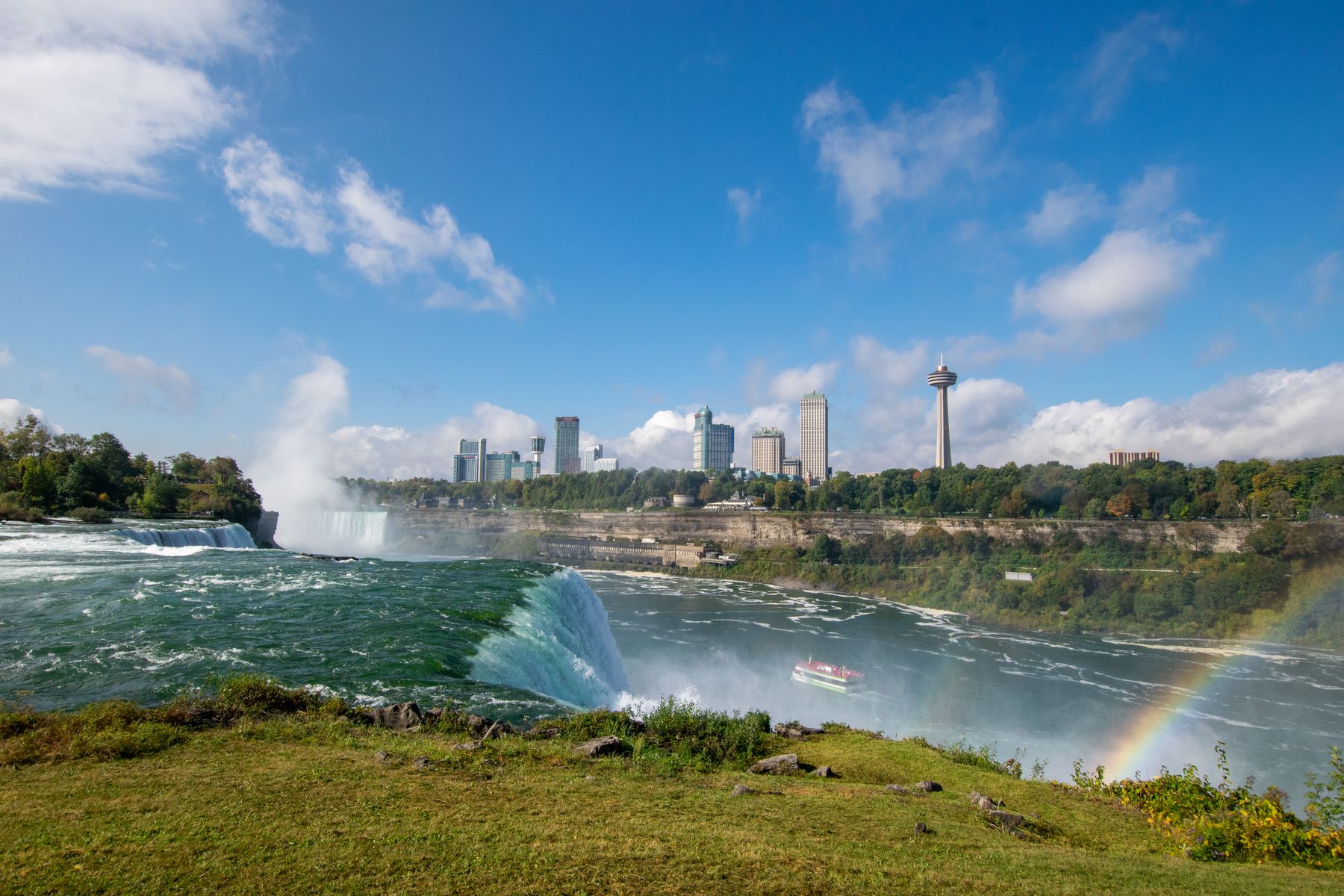
Niagara is a good choice when you want a dramatic waterfall trip with plenty of visitor infrastructure. Give yourself time to try different U.S.-side views rather than treating the visit as one quick photo stop.
| Detail | Planning information |
|---|---|
| Best for | A first waterfall holiday, families, and visitors who prefer shorter walks |
| Location and map | Niagara Falls State Park, New York |
| Time to allow | Half a day to a full day, longer with activities |
| Cost and booking | Ordinary park access, vehicle parking, and attraction tickets have different charging arrangements |
| Getting there | Base the trip on the New York side or plan a longer regional route |
| Accessibility and nearby | Confirm the exact viewpoint and activity access; combine with a relaxed stay in the area |
Choose paid experiences by what you actually want to do. Boat operations and other attractions are seasonal or weather-dependent. A visit to the Canadian side requires a separate border and travel-document plan.
2. Yosemite Falls, California
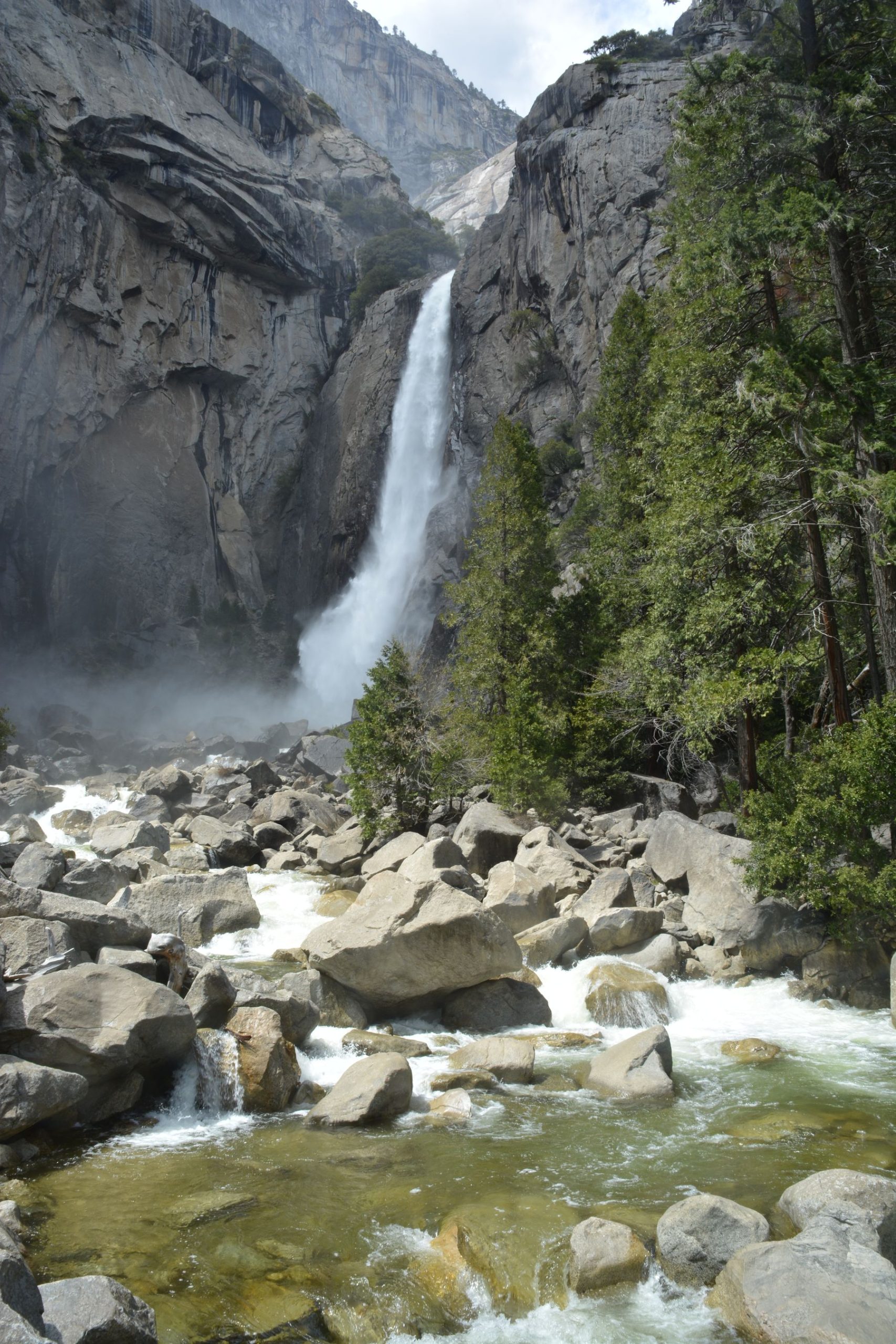
Yosemite Falls is especially impressive when snowmelt sends a strong flow over the granite. Even a short visit feels part of a much larger landscape, with trees and cliffs framing the water.
| Detail | Planning information |
|---|---|
| Best for | Spring waterfall scenery and a wider Yosemite trip |
| Location and map | Lower Yosemite Fall Trailhead |
| Time to allow | Around one hour for a short lower-fall outing; longer for the wider valley |
| Cost and booking | National park admission applies; accommodation and camping are separate |
| Getting there | Use Yosemite Valley access and the operating shuttle where suitable |
| Accessibility and nearby | The park describes an accessible eastern approach to the lower waterfall; verify current conditions |
The lower-fall loop and the demanding hike toward Upper Yosemite Fall are different outings. Late-summer flow can be low or absent, so check the season’s conditions before making the waterfall your only reason to visit.
3. Lower Falls, Yellowstone National Park, Wyoming
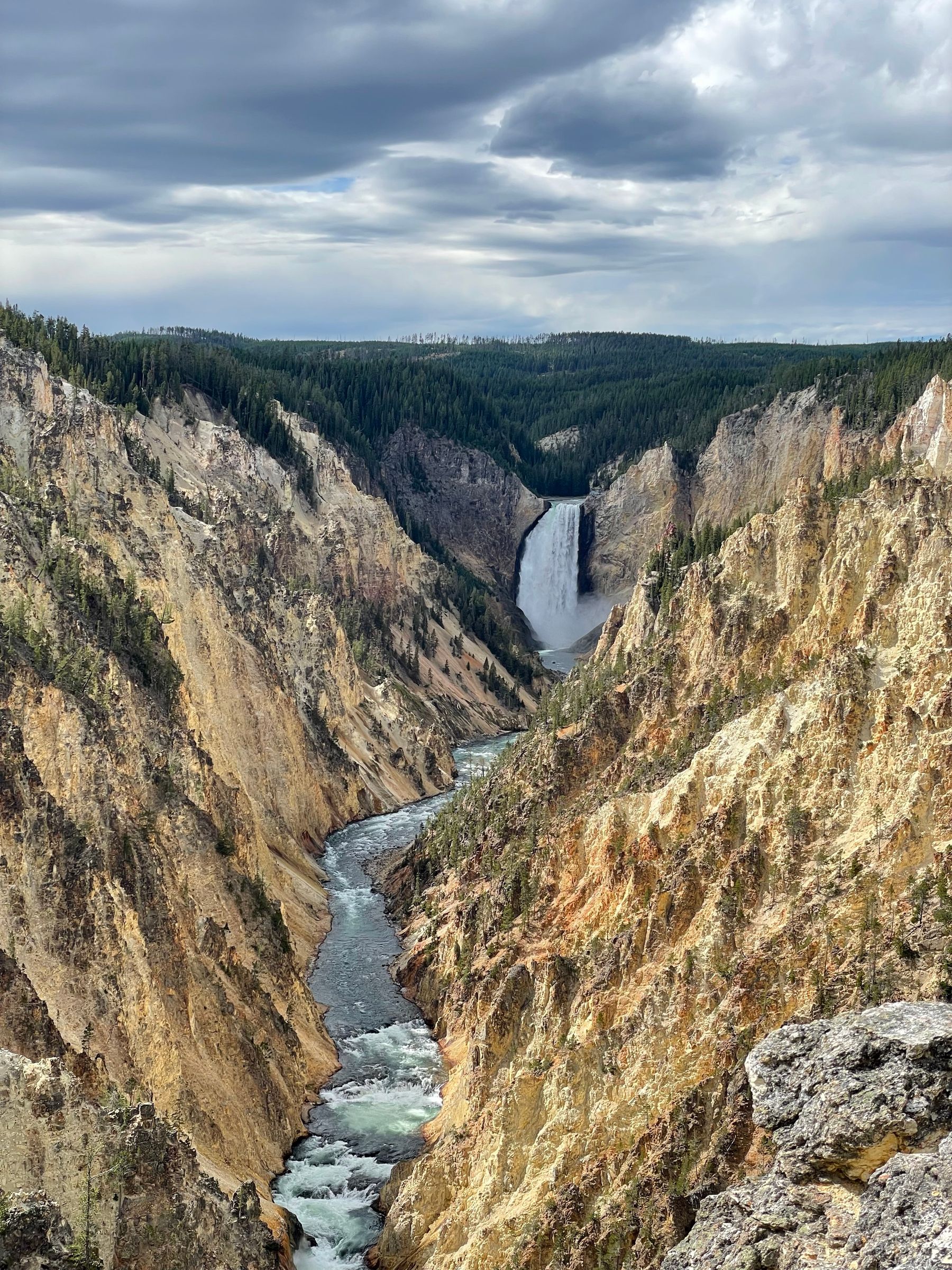
Lower Falls sits within the Grand Canyon of the Yellowstone, where rock colors and the shape of the canyon add to the scene. Choose a confirmed-open overlook and let the view hold your attention for a while.
| Detail | Planning information |
|---|---|
| Best for | Canyon scenery and a wider Yellowstone visit |
| Location and map | Artist Point, Yellowstone |
| Time to allow | A half-day canyon-area block with selected viewpoints |
| Cost and booking | Park entry applies; specific tours or transport cost extra |
| Getting there | Check seasonal road access and the exact viewpoint route |
| Accessibility and nearby | Some viewpoints require fewer steps than others; verify the route rather than assuming all overlooks are alike |
Most Yellowstone interior roads close to ordinary car travel for part of winter. A summer driving itinerary does not transfer directly to November or January. Keep behind barriers, and choose a shorter viewing route when conditions are icy.
4. Multnomah Falls, Oregon
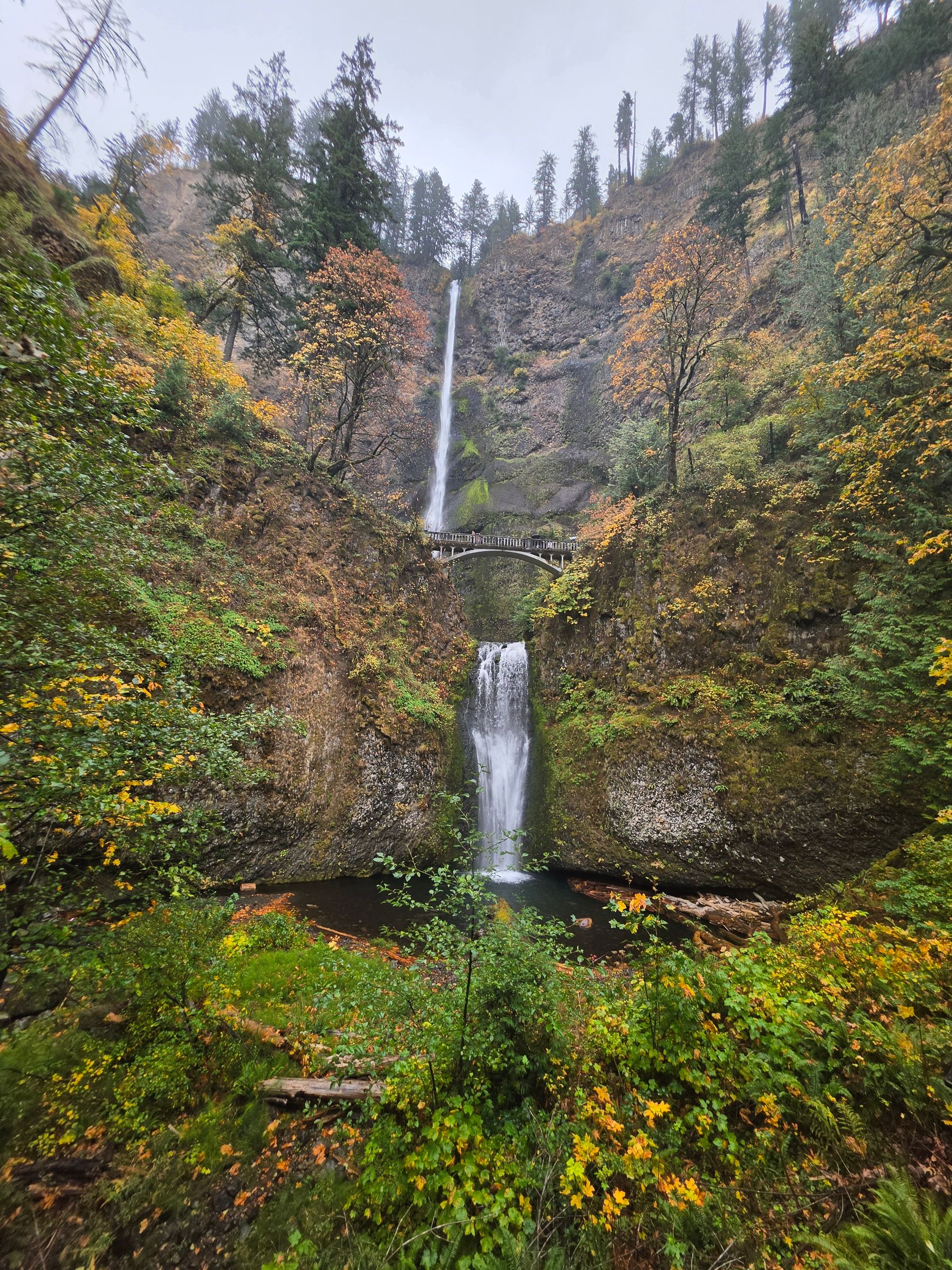
Multnomah Falls combines a tall cascade, a bridge, and a forested Columbia River Gorge setting. You can enjoy the lower viewing area without assuming that a longer uphill walk is part of the same easy stop.
| Detail | Planning information |
|---|---|
| Best for | A gorge day trip and an iconic waterfall view |
| Location and map | Multnomah Falls |
| Time to allow | About one to two hours for a shorter visit, plus access time |
| Cost and booking | Check the exact parking approach and any timed-use permit for your dates |
| Getting there | Options include road access, shuttle services, or a guided trip; confirm what operates |
| Accessibility and nearby | Lower viewing and uphill trail access differ; check surface, slope, and current closures |
In 2026, timed-use permits applied to the I-84 Exit 31 lot from May 22 to September 7, between 9 a.m. and 6 p.m. The 2027 details were still to be confirmed when this guide was checked. A permit does not guarantee a parking space, and rules can differ by approach.
5. South Falls, Silver Falls State Park, Oregon
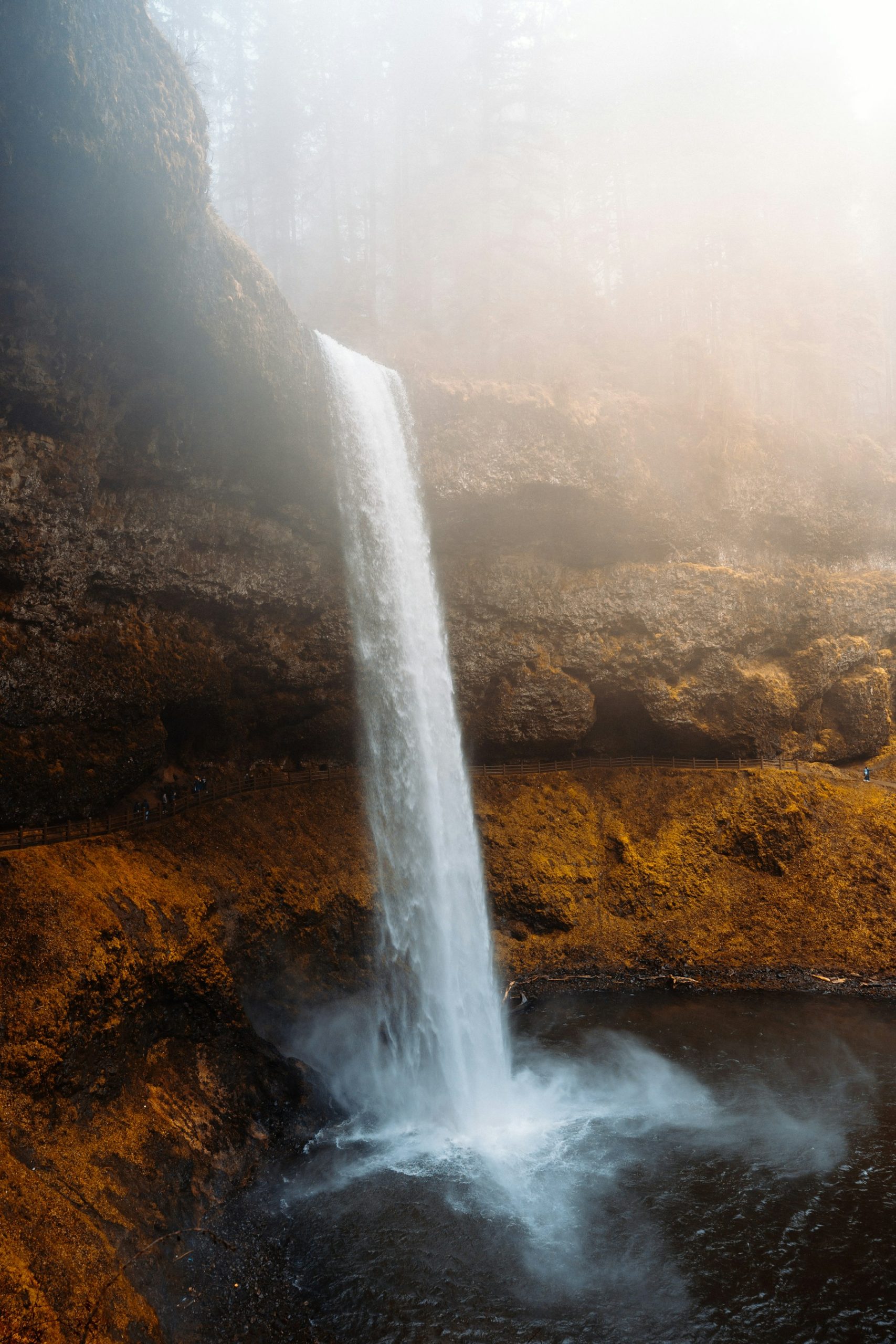
South Falls is a lovely choice for travelers who enjoy forest walking as much as the waterfall itself. The rock ledge gives the setting a distinctive shape, with several possible ways to structure the visit.
| Detail | Planning information |
|---|---|
| Best for | A forest-and-waterfall day with a route matched to your group |
| Location and map | South Falls Day Use Area |
| Time to allow | About one to three hours for a selected shorter outing |
| Cost and booking | Check the current state-park parking permit and any activity-specific arrangements |
| Getting there | Drive to the appropriate day-use area and use designated parking |
| Accessibility and nearby | Rim viewing and descending trails have different grades and surfaces |
The full Trail of Ten Falls is a more substantial outing than a short South Falls visit. A landslide closure affecting Winter Falls Trail and its trailhead was listed when checked in November 2026. Confirm all connecting sections before committing to a loop.
6. Shoshone Falls, Idaho
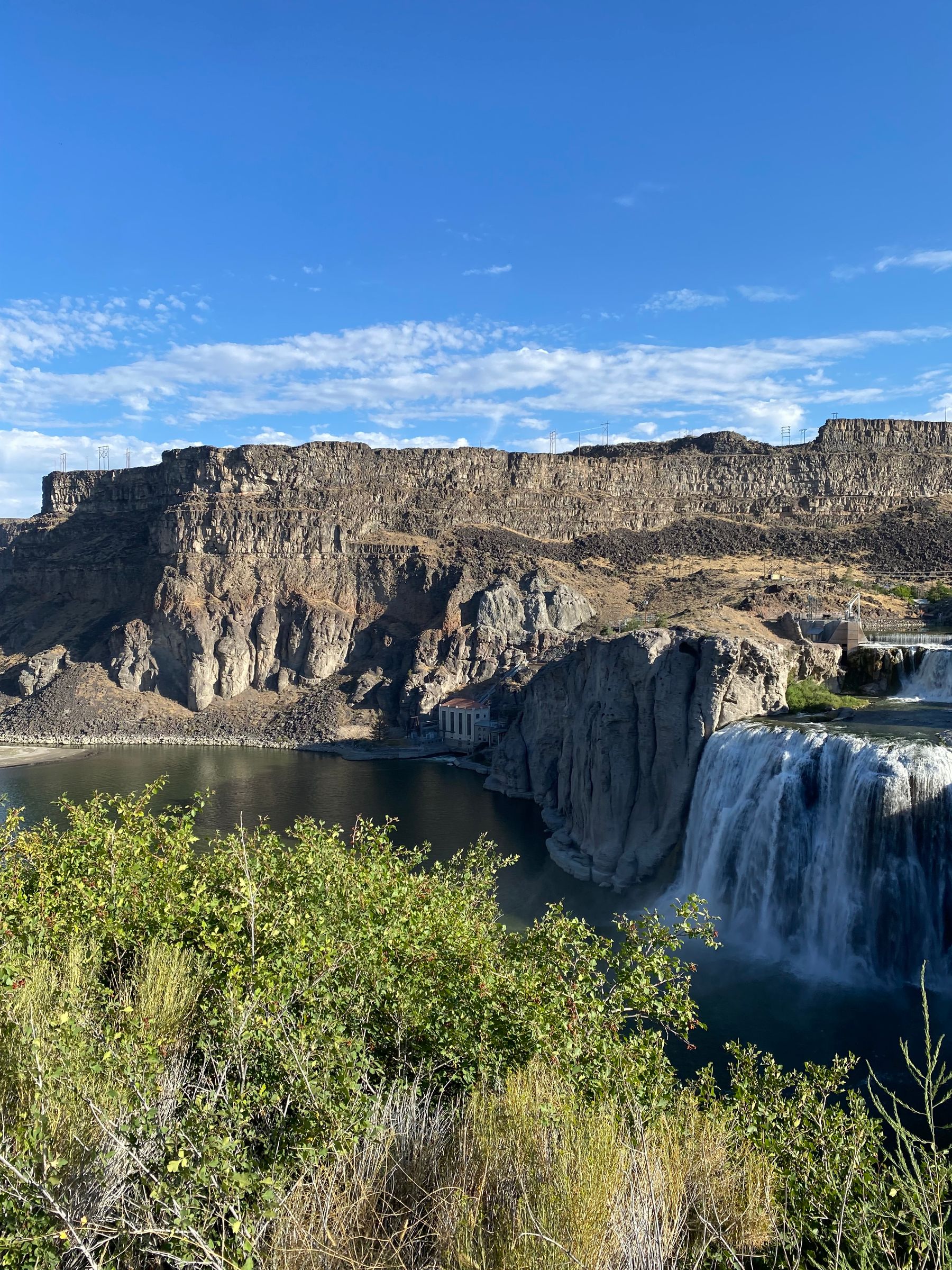
Shoshone Falls makes a dramatic stop in the Snake River canyon when flow is strong. It also shows why waterfall planning benefits from a current flow check: the appearance can change considerably through the year.
| Detail | Planning information |
|---|---|
| Best for | A canyon viewpoint and a southern Idaho road trip |
| Location and map | Shoshone Falls Park, Twin Falls |
| Time to allow | Around one to two hours |
| Cost and booking | Check current city-park entry, parking, and operating arrangements |
| Getting there | Drive from the Twin Falls area using the signed park route |
| Accessibility and nearby | Confirm the viewing platform and facility access that suit your needs |
Spring can offer strong flow, but snowpack and water management affect the result. The city notes that fall flow can be minimal or nearly dry. Check the latest conditions before making a long detour.
7. Snoqualmie Falls, Washington
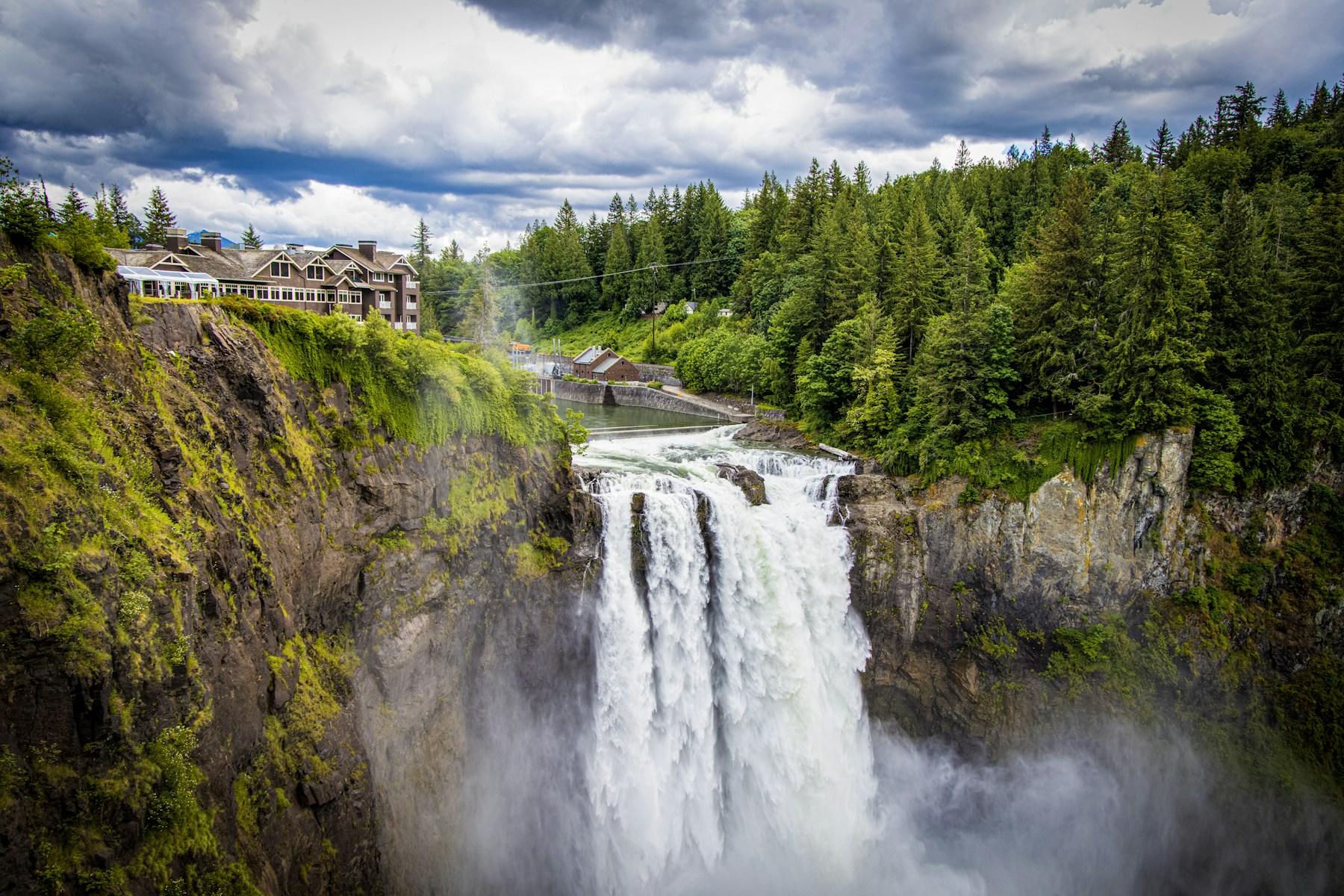
Snoqualmie is a useful choice for a shorter waterfall outing in the Seattle region. The upper viewing area makes it possible to enjoy the waterfall without committing to the descent toward the lower park.
| Detail | Planning information |
|---|---|
| Best for | A shorter outing and travelers who want viewing options |
| Location and map | Snoqualmie Falls upper park |
| Time to allow | About 45–90 minutes for upper viewing; longer with a lower-area walk |
| Cost and booking | Parking arrangements and charges differ by lot; confirm the option you use |
| Getting there | Drive or use a confirmed operating tour or transport service |
| Accessibility and nearby | The official site identifies an accessible upper viewing approach from the nearby paid lot; verify current conditions |
Respect the falls’ cultural importance to the Snoqualmie Tribe. Use designated viewing areas, and choose the route for your mobility needs and the day’s weather.
8. Havasu Falls, Havasupai Reservation, Arizona
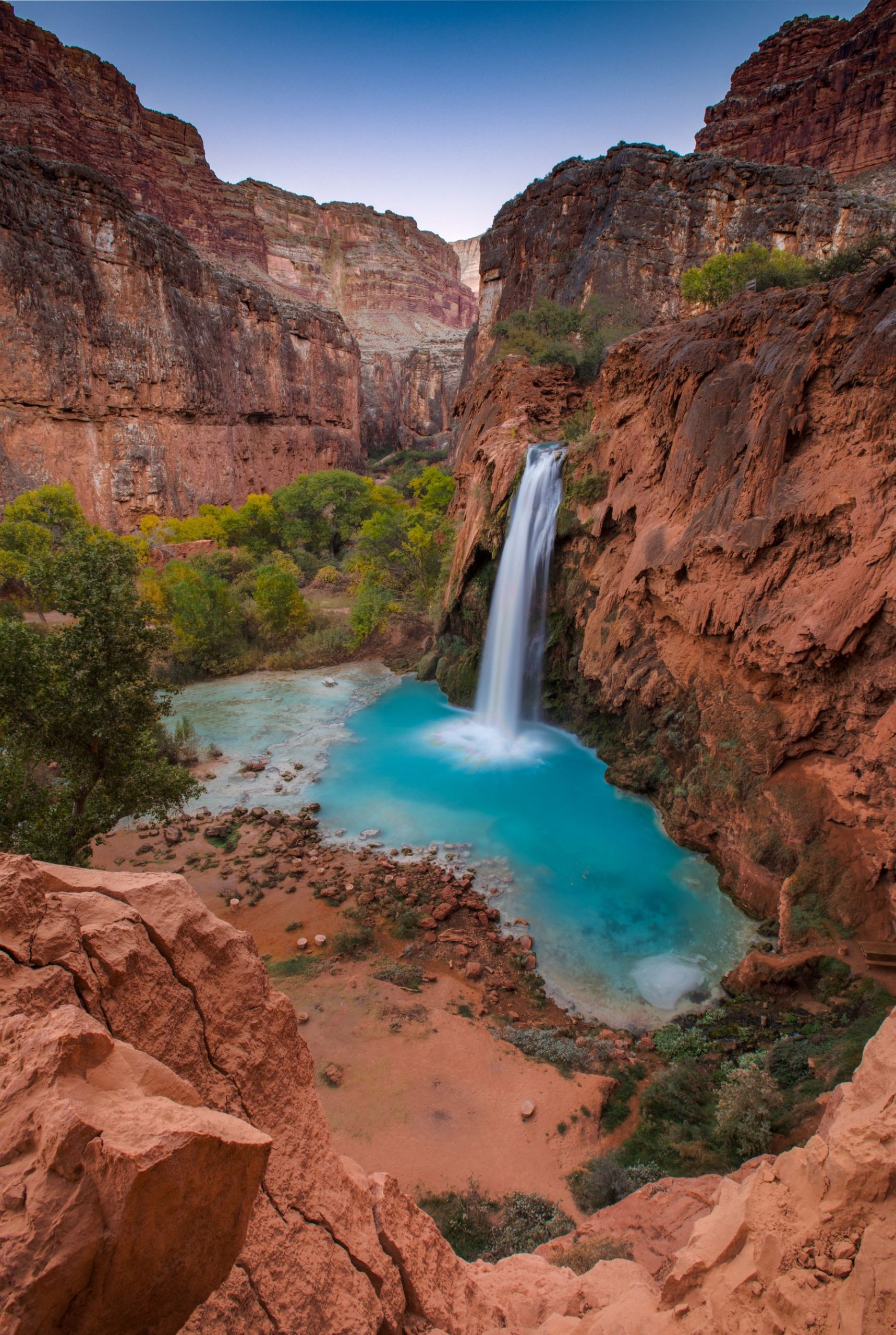
The turquoise water and canyon setting make Havasu Falls a distinctive destination. The journey requires more planning, fitness, and commitment than the roadside waterfalls in this list.
| Detail | Planning information |
|---|---|
| Best for | Prepared travelers planning a demanding reserved overnight trip |
| Location and map | Hualapai Hilltop trailhead area |
| Distance context | Roughly eight miles to Supai, then about two more to the campground area |
| Cost and booking | A confirmed reservation through the Havasupai Tribe’s authorized system is essential |
| Getting there | Plan the remote trailhead journey, parking, arrival rules, and the full return hike |
| Accessibility and nearby | A demanding canyon route; arrange the trip around current Tribal rules and your abilities |
No day hiking is allowed. Havasu Falls is outside Grand Canyon National Park, with separate Tribal control and charges. Check current stay lengths, costs, closures, baggage arrangements, and conditions directly with the Tribe. Do not assume a helicopter or pack service will solve a difficult return.
9. Akaka Falls, Hawaii Island
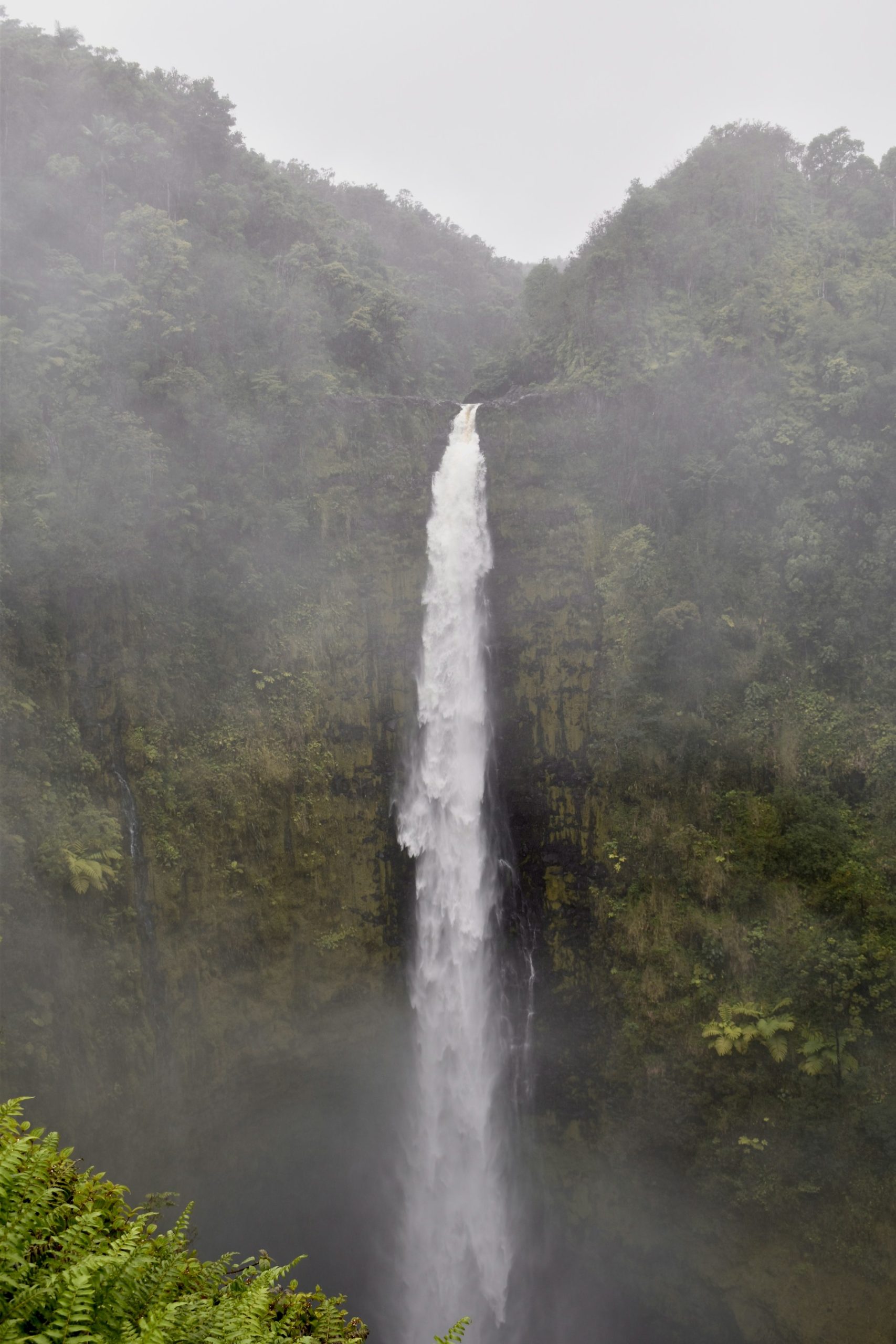
Akaka Falls drops into a green gorge, creating a very different experience from a desert canyon or mountain waterfall. It fits well into a carefully paced Hawaii Island trip.
| Detail | Planning information |
|---|---|
| Best for | Tropical scenery and a shorter sightseeing outing |
| Location and map | Akaka Falls State Park |
| Route and time | About a 0.4-mile loop; allow roughly 45–90 minutes with stops |
| Cost and booking | As checked, nonresident entry was $5 per person plus $10 parking; resident exemptions require appropriate identification |
| Getting there | Plan a Hawaii Island base and local transport; flights between islands are separate |
| Accessibility and nearby | The loop has multiple steps and is not wheelchair accessible |
Bring a light rain layer and footwear with grip. Confirm opening hours and the payment arrangement before arriving. The gorge and waterfall should be enjoyed from the designated path.
10. Amicalola Falls, Georgia
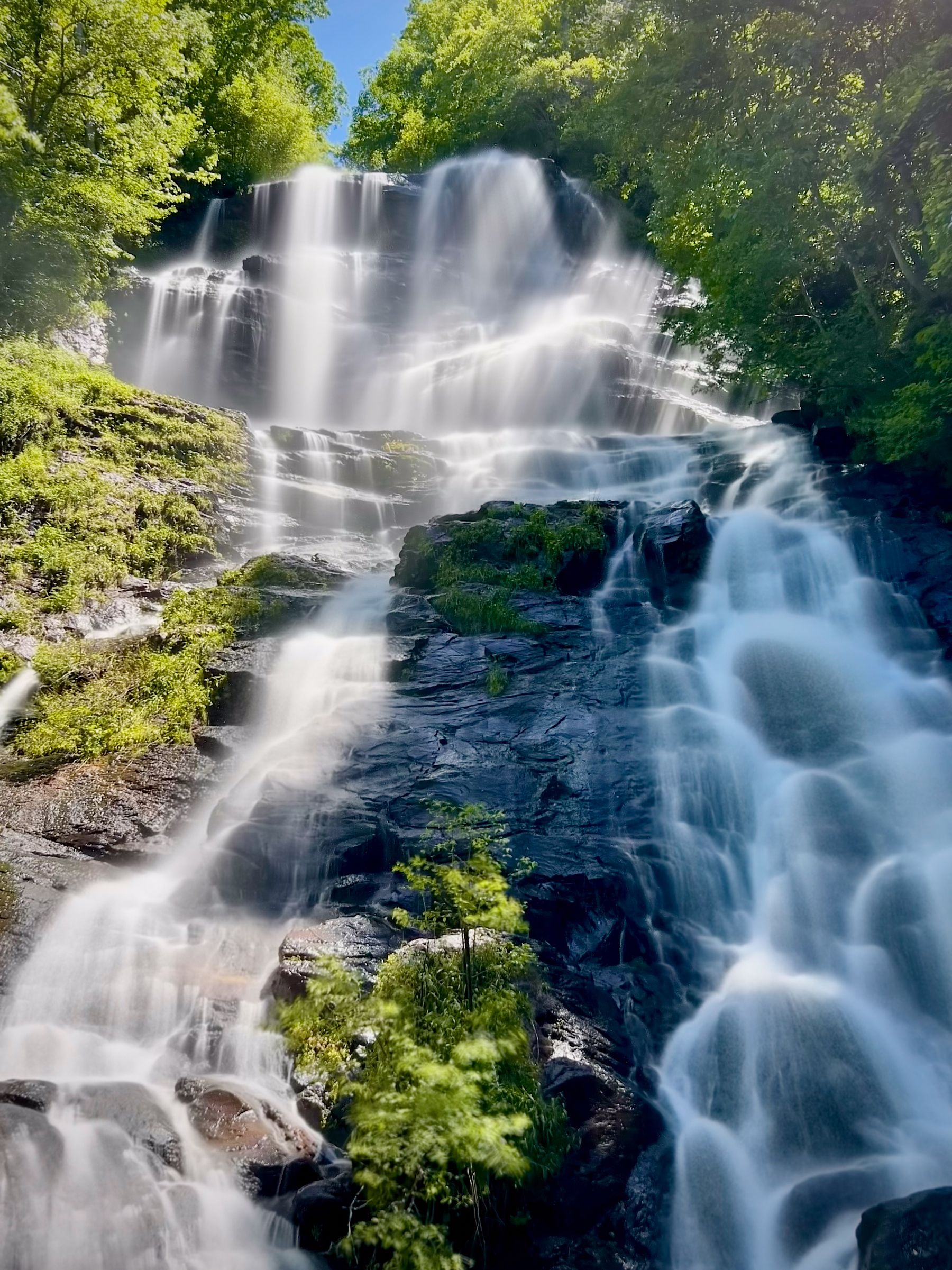
Amicalola is a good destination for travelers who want waterfall scenery in the north Georgia mountains. The route you choose makes a large difference to the day’s effort.
| Detail | Planning information |
|---|---|
| Best for | A mountain day trip with different viewing choices |
| Location and map | Amicalola Falls State Park |
| Time to allow | About two to four hours for a chosen outing and breaks |
| Cost and booking | Check the current state-park parking fee and any separately booked activity |
| Getting there | Drive to the appropriate park area and follow the current visitor map |
| Accessibility and nearby | Stair-heavy routes and shorter viewing options differ; ask staff for the route that meets your needs |
Do not assume every platform can be reached by the same easy path. Take the stairs at your own pace, and choose a shorter route if the full climb does not suit everyone.
11. Looking Glass Falls, North Carolina
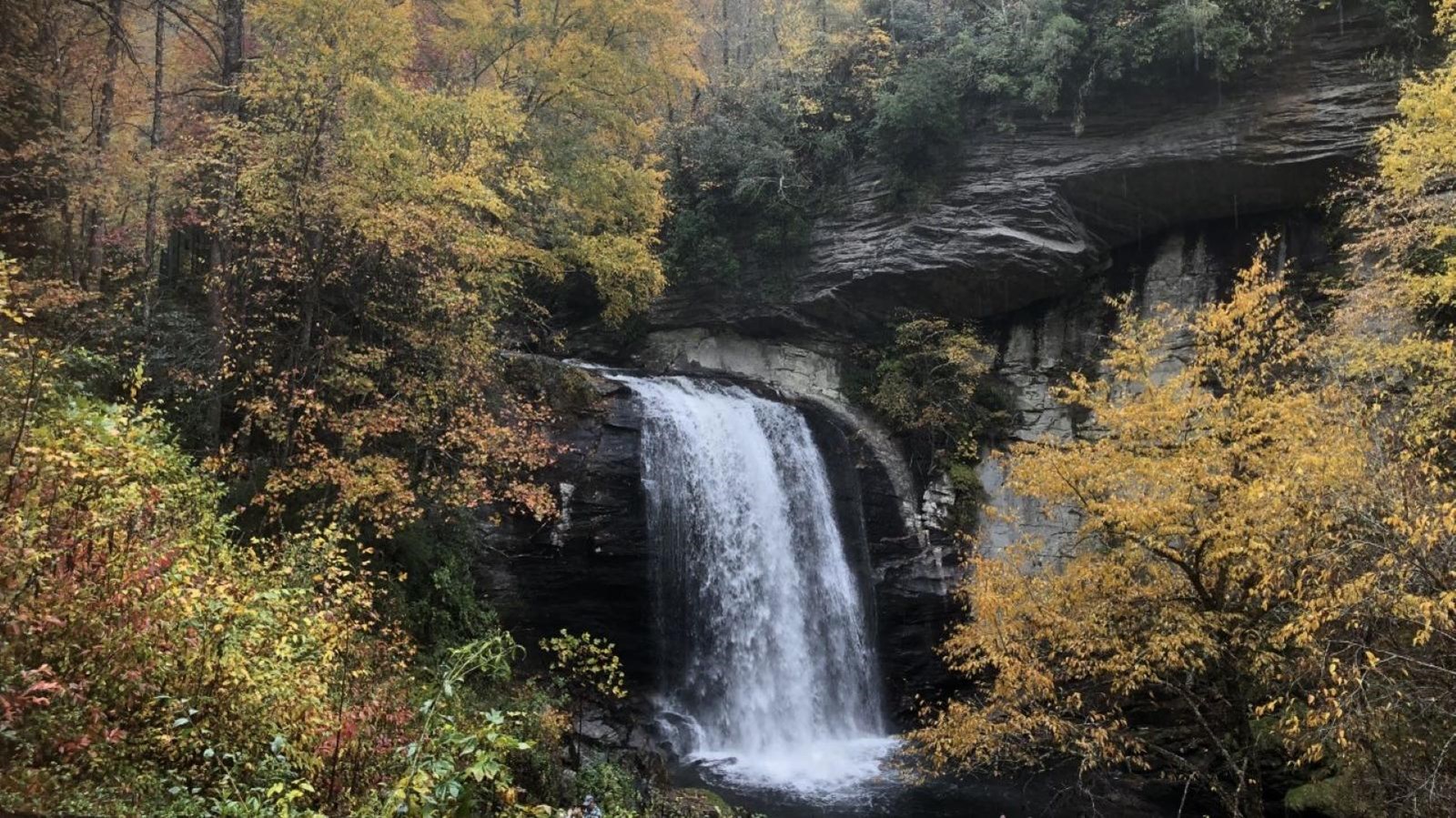
Looking Glass Falls is a rewarding stop near Brevard in Pisgah National Forest. Its close-to-road setting makes it easier to fit into a regional trip while still leaving time to watch the water.
| Detail | Planning information |
|---|---|
| Best for | A shorter waterfall stop and a Blue Ridge region trip |
| Location and map | Looking Glass Falls on U.S. 276 |
| Time to allow | About 30–60 minutes |
| Cost and booking | Check current national-forest access notices and any parking restrictions |
| Getting there | Use designated roadside parking on the falls side of the road |
| Accessibility and nearby | A paved street-level walkway offers a view; lower access uses steps |
Park only where permitted and leave room for traffic and other visitors. The rocks beside the water are slippery; the established viewing route gives you a safer way to enjoy the scene.
12. Myrtle Falls, Mount Rainier National Park
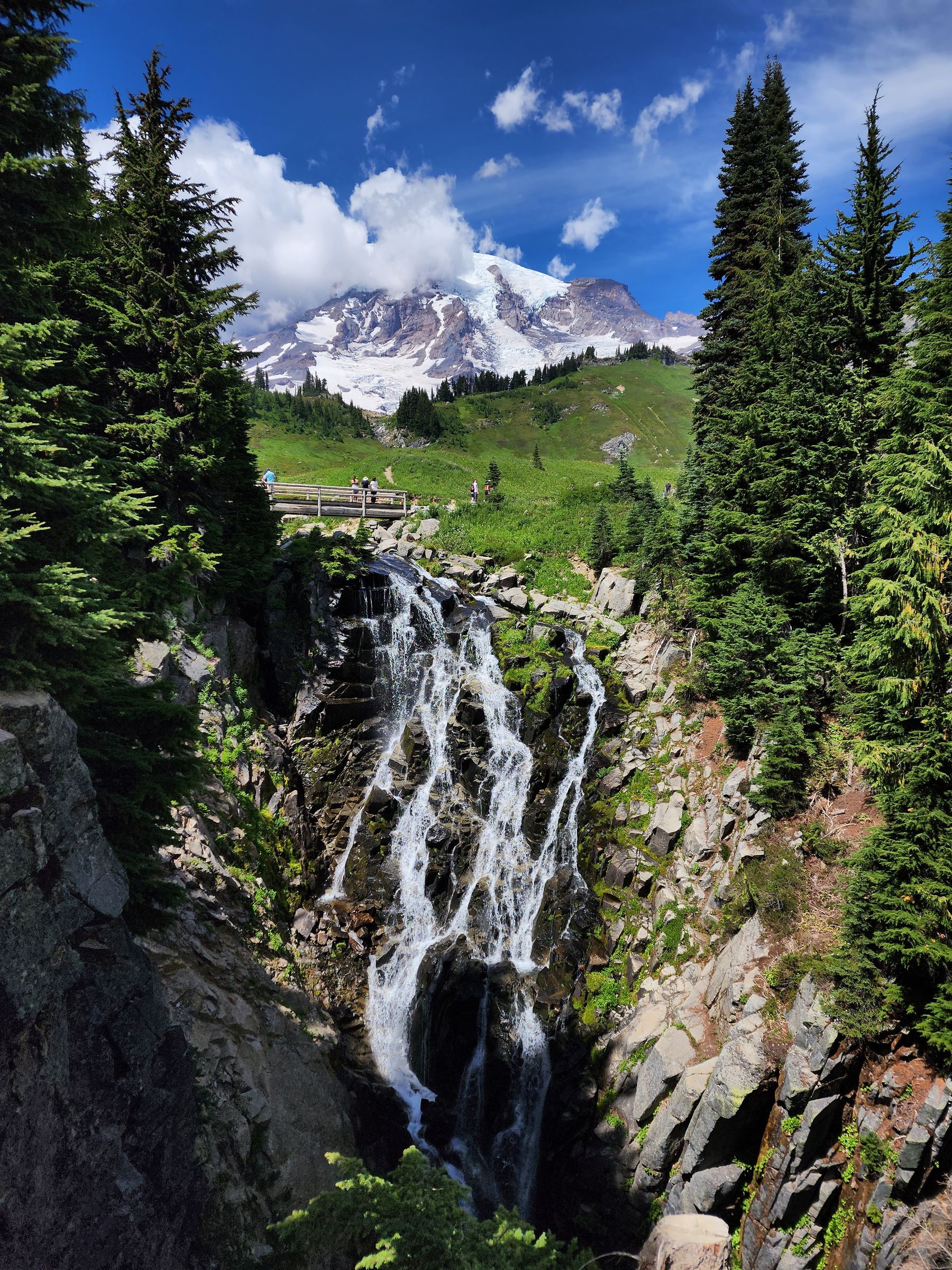
Myrtle Falls is especially appealing when the mountain is visible behind it. It works best as part of a Paradise-area visit with enough flexibility for cloud, snow, and parking.
| Detail | Planning information |
|---|---|
| Best for | A short mountain walk in suitable snow-free conditions |
| Location and map | Myrtle Falls, Paradise |
| Route and time | About one mile return; allow 45–90 minutes plus access time |
| Cost and booking | National park admission applies; confirm current vehicle-access arrangements |
| Getting there | Check Paradise road status and the exact walking route |
| Accessibility and nearby | Paved sections have grades, and the viewpoint has steps; winter conditions can change access completely |
A photograph with summer flowers does not describe the route in every month. Ask staff about the current trail before walking across snow or choosing an unfamiliar shortcut.
Best Time to Visit U.S. Waterfalls
| Region or setting | What to consider |
|---|---|
| Sierra Nevada | Snowmelt often favors spring and early summer; late-season flow varies |
| Pacific Northwest | Rain and snowmelt influence flow; storms can close paths and roads |
| Yellowstone and high mountains | Road openings and safe viewpoint access matter as much as flow |
| Idaho canyon country | Check the current flow report, especially in late summer or fall |
| Eastern mountain waterfalls | Rainfall affects flow; storms and winter ice create separate hazards |
| Hawaii | Rain, trail surfaces, and local closures need a fresh check |
Aim for a suitable flow period with safe access. A major storm can make a waterfall impressive while also making the outing unsuitable.
Holiday weekends can bring crowded parking and higher room rates. Quieter weekdays may help, but check seasonal services before booking a lower-priced stay.
How to Plan and Book a Waterfall Trip
Start with the official park, city, forest, or Tribal manager for your chosen waterfall. Verify the route, parking, fees, current closures, and operating hours.
Book accommodation and remote reservations first. Then arrange flights or a rental car, paid activities, and any required timed parking or transport. Havasupai requires a completely separate reserved overnight plan; Hawaii needs island-specific transport.
Save a route from Portland to Silver Falls State Park as one regional example. Check each road with the managing authority before trusting an app’s suggested shortcut.
Where to Stay, How to Get Around, and What to Eat
Stay near the group of waterfalls you actually plan to visit. Portland-area and Silver Falls outings can fit one Oregon trip; Seattle-area Snoqualmie and a Mount Rainier visit need their own timing and bases.
A car is useful for many destinations, while some waterfalls have seasonal shuttles, tours, or restrictions. Check the last return service and the location of the exact parking lot you have reserved.
Carry breakfast or lunch supplies, drinking water, and snacks. Gateway-town restaurants can have seasonal hours. Ask about dietary needs and allergies before relying on a small café or park outlet.
Waterfall Itinerary Ideas
A Weekend or Three Days
Choose one main destination and a nearby base. Niagara can support a relaxed short break. A western North Carolina trip can pair Looking Glass Falls with other confirmed-open regional outings.
Four or Five Days
An Oregon trip can include Multnomah and South Falls on separate days, with time for Portland, the drive, and a weather alternative. Keep longer hikes optional rather than attaching one to every viewpoint stop.
A Seven-Day Regional Trip
A Pacific Northwest trip could combine Oregon waterfall days with a separate Washington base. Allow a real travel day and check mountain-road access before adding Myrtle Falls. Choose fewer stops if you prefer less driving.
Slower-Paced and Rainy-Day Alternatives
Select a close-to-parking viewpoint confirmed suitable for your needs, a town visit, or an indoor attraction. During flood warnings, severe weather, or dangerous ice, use the day for something else.
How Much Does a Waterfall Trip Cost?
Sample Regional Budget for Two Adults
This example covers four travel days and three nights in one mainland region, with a shared room and car, selected entry fees, and modest optional activities. Room and car allowances include estimated taxes and routine fees.
| Expense | Planning allowance |
|---|---|
| Accommodation: 3 nights × $180 | $540 |
| Food and groceries | $320 |
| Rental car | $280 |
| Fuel | $135 |
| Park and attraction entry allowance | $70 |
| Optional activities | $105 |
| Parking allowance | $50 |
| Subtotal | $1,500 |
| Contingency: 10% | $150 |
| Total for two adults | $1,650 |
Flights, major equipment, travel insurance, extra nonresident national-park charges, Hawaii interisland travel, and a Havasupai trip are excluded. This is a planning example, not a quotation for all 12 waterfalls.
Federal park passes, state-park parking permits, municipal fees, and Tribal reservations cover different things. Compare each actual charge before buying a pass or bundle.
Free and Budget-Friendly Ways to Enjoy Waterfalls
Choose ordinary viewpoints and walks that are already included in your entry or parking payment. Bring a picnic, share a practical base, and pay for an extra activity only if it adds something you want.
Read cancellation terms before booking a weather-sensitive outing. Avoid paying for a long detour simply because a waterfall is famous; choose the flow and access that fit your trip.
Families, Couples, Solo Travelers, and Accessible Outings
Families benefit from shorter walks, a clear viewing boundary, and enough time for meals and restrooms. Children need close supervision near water, stairs, roads, and slippery surfaces.
Couples can choose a quieter viewing period and leave room for a relaxed meal. Solo walkers should share their route and return time. Groups should choose a route suitable for everyone.
For an accessible visit, verify the exact parking position, surface, slope, distance, steps, restroom, and viewing platform. Niagara, Snoqualmie, Looking Glass, and other places have different routes with different levels of access.
Waterfall Photography and Safety
Choose your safe standing position before looking through the camera. Keep behind barriers, leave room for others, and stay off wet rocks near the edge. Do not cross a closure to get a clearer picture.
Mist can wet a lens quickly, so carry a cloth and simple weather protection. Softer light can help with contrast, but safety and access matter more than a particular photo style.
Avoid entering swift water or standing above a waterfall. Flooding, cold water, strong currents, and slippery rock can create danger even where the scene looks calm. Follow the site’s current rules for swimming, drones, and pets.
What to Pack and Practical Essentials

Pack footwear with grip, a rain shell, layers, water, food, sun protection, personal medication, offline maps, a charged phone, a portable battery, and a headlamp for longer outings.
Add route-specific equipment only after choosing the route. A reserved overnight canyon trip needs substantially more preparation than a roadside viewpoint.
Check restrooms, refill points, and opening hours before leaving your base. Keep rubbish secure, use designated paths, and protect vegetation around the viewing areas.
Important Contacts and Planning Resources
| Need | What to save |
|---|---|
| Immediate emergency | 911; some locations have poor or absent reception |
| Current access advice | The park, forest, city, state, or Tribal visitor-information service |
| Reservation problem | Your official confirmation and issuing provider |
| Havasupai trip | The Tribe’s current visitor rules and authorized reservation details |
| Transport disruption | The operating shuttle, tour, airline, or rental-car contact |
| Check-in plan | A trusted person with your route and expected return |
Use the managing authority for current closures. An old photo, social-media post, or tour advertisement cannot confirm that a route is open today.
Common Waterfall-Trip Mistakes
- Choosing dates without checking likely flow.
- Confusing a viewpoint stop with a long hike to the same waterfall.
- Assuming a parking permit guarantees a space.
- Planning Havasu Falls as an unreserved day trip.
- Treating every state or Tribal site as included in a federal pass.
- Descending steps without considering the climb back.
- Using a summer photograph to judge winter conditions.
- Trying to connect far-apart waterfalls without enough travel time.
Frequently Asked Questions About U.S. Waterfalls
Which Waterfall Is Best for a First Visit?
Choose by the region, season, and kind of outing you want. Niagara is convenient for a larger visitor-focused trip, while selected Snoqualmie or Looking Glass viewpoints can suit a shorter outing.
When Are Waterfalls at Their Strongest?
It depends on the watershed and the year. Snowmelt, rainfall, and water management matter. Check current conditions rather than relying on one “best month” for the whole country.
Can I Swim at These Waterfalls?
Do not assume swimming is permitted or safe. Follow the site’s current rules and warnings. Designated viewpoints are the focus of this guide.
Can I Visit Havasu Falls in One Day?
No. The Havasupai Tribe does not allow day hiking. Arrange a valid overnight reservation and prepare for the demanding journey under current Tribal rules.
Are Waterfall Walks Accessible?
Some viewpoints have suitable paved approaches, while others include stairs, steep grades, or uneven ground. Verify the exact route and facilities for your needs.
What if Heavy Rain Is Forecast?
Check flood and closure notices, and change the outing if necessary. Stronger flow does not make a route safe to use during dangerous weather.
Your Final Waterfall-Trip Checklist
- Choose one practical region and suitable travel dates.
- Check current flow, roads, trails, and weather.
- Confirm parking, entry, permits, and reservations.
- Verify the walking route and return effort.
- Save offline maps and a weather alternative.
- Pack shoes with grip, water, food, and layers.
- Confirm access needs and facilities.
- Keep to designated paths and viewing areas.
Reader Questions and Travel Experiences
Which waterfall would you most like to see? If you have visited one, share the month, the route you used, and a helpful detail about flow, access, or parking.
Explore More Travel Guides
Continue with Best Things to Do in Yosemite National Park, our Complete Guide to Visiting Yellowstone National Park, and A Complete Blue Ridge Parkway Road Trip.
For more outdoor planning, read Best Hiking Trails in the United States and Best Places to See Wildlife in America.
Leave a Reply
What would you like to know before you go?
Send us your question, feedback, or a place you would like to see covered.
Ask a travel question
Leave a Reply